Stock Salesforce searches usually refer to Salesforce, Inc. shares traded on the New York Stock Exchange under the ticker CRM. The share price reflects more than product announcements: investors evaluate revenue growth, contracted backlog, operating margin, cash generation, guidance, acquisitions, competition, and whether products such as Agentforce and Data 360 produce measurable customer spending.
This article explains how to interpret Salesforce stock movements without treating a single headline, product release, or quarterly percentage as a complete investment thesis. It is educational content, not personalized financial advice.
Stock Salesforce: company, ticker, and reporting calendar
Salesforce, Inc. trades under the ticker CRM. Do not confuse the ticker with the general abbreviation for customer relationship management. A search for salesforce sto k is usually a misspelling of Salesforce stock and should lead to the same CRM ticker research.
Salesforce uses a fiscal year that ends on January 31. For example, fiscal year 2026 ended on January 31, 2026, rather than December 31, 2026. This distinction matters when comparing quarterly results with calendar-year news.
Salesforce reported fiscal 2026 revenue of $41.5 billion and subscription and support revenue of $39.4 billion. In its first-quarter fiscal 2027 announcement dated May 27, 2026, the company guided to full-year fiscal 2027 revenue of $45.9 billion to $46.2 billion. Readers should verify current figures on the Salesforce quarterly results page because guidance can change each quarter.
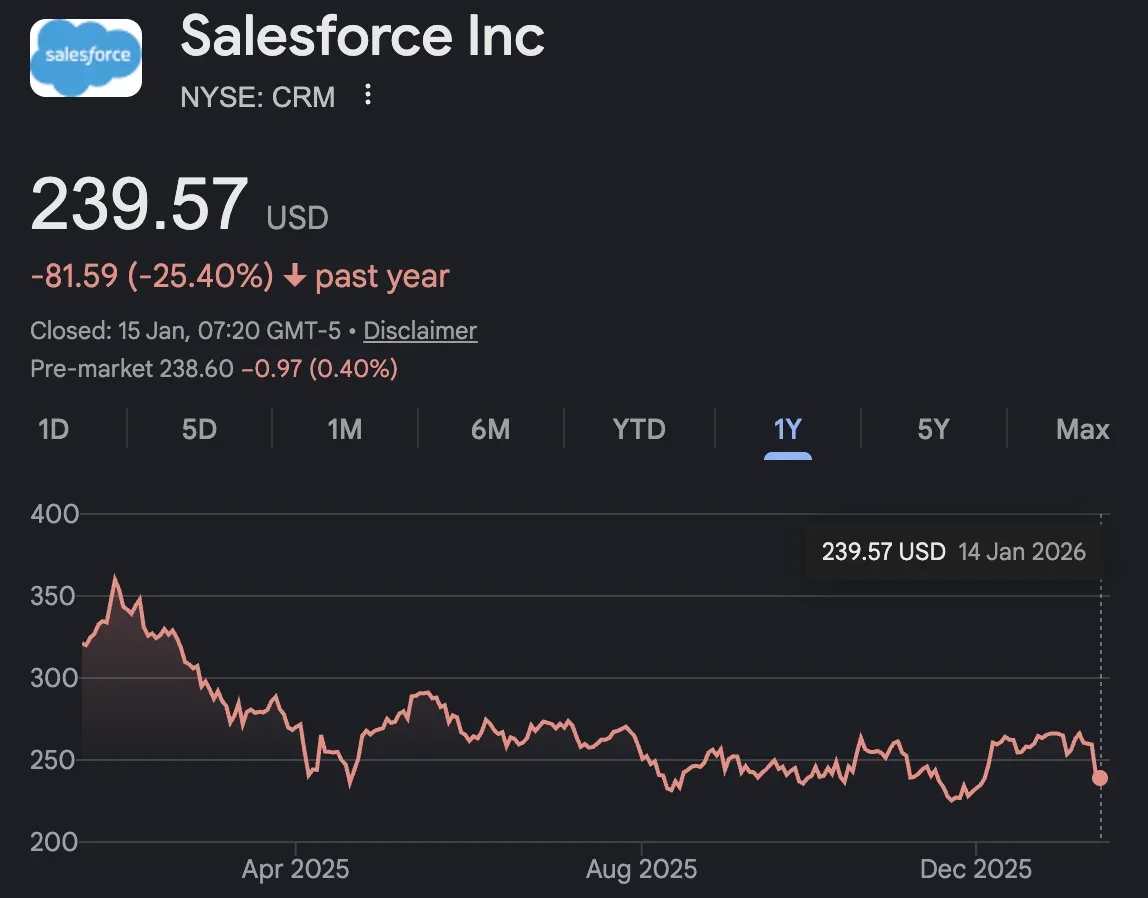
What is Salesforce software and how does it generate revenue?
What is Salesforce software?
The query what is Salesforce software has a direct answer: Salesforce provides cloud applications and platform services for managing customer data and workflows across sales, service, marketing, commerce, analytics, integration, collaboration, application development, data management, and AI-assisted work.
Salesforce documentation explains that CRM systems manage interactions with current and potential customers. Within the Salesforce data model, information is stored as objects and records. Standard objects include Account, Contact, Lead, Case, and Opportunity, while custom objects let an organization represent its own business entities.
For technical readers, the important point is that Salesforce is not one application. Customer contracts may include multiple products, editions, add-ons, data capacity, integration services, support plans, and usage-based services. Revenue therefore depends on customer retention, seat counts, product expansion, contract duration, usage, pricing, and the timing of revenue recognition.
Official learning references include the Salesforce CRM Trailhead module and Salesforce’s explanation of customer relationship management.
Why is CRM stock down or up on a given day?
Why is CRM stock down?
There is rarely one universal answer to why is CRM stock down. A decline can occur even after Salesforce reports higher revenue because the market prices shares against prior expectations. Results that exceed the previous year but fall below analyst forecasts, management guidance, or the valuation implied by the existing share price can still produce a sell-off.
| Driver | What investors examine | Why the stock may react |
|---|---|---|
| Revenue growth | Total revenue, subscription and support growth, and constant-currency growth | Slower growth can reduce assumptions about future cash flow. |
| Guidance | Next-quarter and full-year revenue, earnings, margin, and cRPO outlook | Forward guidance often matters more than the completed quarter. |
| cRPO | Current remaining performance obligation expected to become revenue within 12 months | It provides a forward-looking view of contracted business, subject to contract timing and changes. |
| Operating margin | GAAP and non-GAAP operating margin | Margin expansion may support earnings even when revenue growth moderates. |
| Cash flow | Operating cash flow, capital expenditure, and free cash flow | Cash generation affects valuation, buybacks, dividends, and acquisition capacity. |
| Stock-based compensation | Expense, dilution, and share-count movement | High compensation expense can widen the difference between GAAP and non-GAAP results. |
| Acquisitions | Purchase price, financing, integration cost, and expected contribution | Investors may disagree about whether an acquisition will improve long-term returns. |
| AI monetization | Paid adoption, contract size, usage, renewal, and attach rate | Announcements alone do not establish recurring revenue or margin contribution. |
Guidance can outweigh a strong reported quarter
Suppose Salesforce reports quarterly revenue above the same quarter a year earlier, but management forecasts lower next-quarter growth than the market expected. The stock can fall because investors revise future revenue and cash-flow estimates. Conversely, shares may rise after modest reported growth if guidance, margins, or contracted backlog improve more than expected.
Interest rates and software valuations
Software companies are often valued using expectations about cash generated over many future years. Changes in interest rates and required investor returns can change the present value assigned to those future cash flows. This can move CRM alongside other software shares even when Salesforce has released no company-specific news.
Product news must connect to financial evidence
Agentforce, Data 360, Slack, MuleSoft, Tableau, Sales Cloud, and Service Cloud announcements may affect sentiment. A disciplined review asks whether the announcement changes paid adoption, contract value, retention, implementation cost, infrastructure spending, or operating margin. Product availability and product revenue are not the same measure.
How to analyze Salesforce earnings before judging the stock
- Confirm the fiscal period. Salesforce’s quarter labels do not match calendar-year quarter labels.
- Read the official earnings release. Start with GAAP results, reported guidance, reconciliations, and definitions.
- Compare reported and constant-currency growth. Currency movements can change reported growth without changing local-currency sales activity.
- Review cRPO and remaining performance obligation. Note that contract duration, billing terms, acquisitions, and foreign exchange can affect comparisons.
- Compare GAAP and non-GAAP results. Identify adjustments for stock-based compensation, purchased intangible amortization, restructuring, and acquisition-related costs.
- Check cash flow and share count. Buybacks can reduce shares outstanding, while employee equity issuance can offset part of that reduction.
- Read the risk factors. Annual and quarterly SEC filings describe competition, cybersecurity, regulation, acquisitions, service availability, AI risks, and customer spending conditions.
- Separate facts from forecasts. Management guidance, analyst estimates, and investor projections are forward-looking and can change.
The most reliable starting points are Salesforce’s annual reports, SEC filings, and quarterly earnings materials.
Which Salesforce metrics deserve the most attention?
Revenue and subscription growth
Subscription and support revenue represents the core recurring business. Compare its year-over-year growth with total revenue growth and note whether acquisitions materially affected the comparison.
Current remaining performance obligation
Current remaining performance obligation, commonly written as cRPO, represents contracted revenue expected to be recognized during the next 12 months. It is useful but not identical to bookings, billings, cash collection, or reported revenue.
GAAP operating margin
GAAP operating margin includes stock-based compensation and other expenses recognized under accounting rules. Non-GAAP margin can help compare operating trends, but readers should inspect every excluded item rather than relying on the adjusted percentage alone.
Free cash flow
Salesforce commonly defines free cash flow as operating cash flow less capital expenditures. Verify the company’s reconciliation and do not assume every publisher uses the same definition.
Diluted earnings per share
Diluted earnings per share combines net income with the diluted weighted-average share count. EPS can rise because of higher income, fewer shares, or both. Review share repurchases together with stock-based compensation and acquisition-related issuance.
How should stock Salesforce be compared with software peers?
A useful comparison does not ask only which chart rose or fell the most. Compare growth, margin, free cash flow, valuation, debt, acquisition exposure, customer concentration, product mix, and fiscal calendars. Companies classified as software peers can have different revenue models and risk profiles.
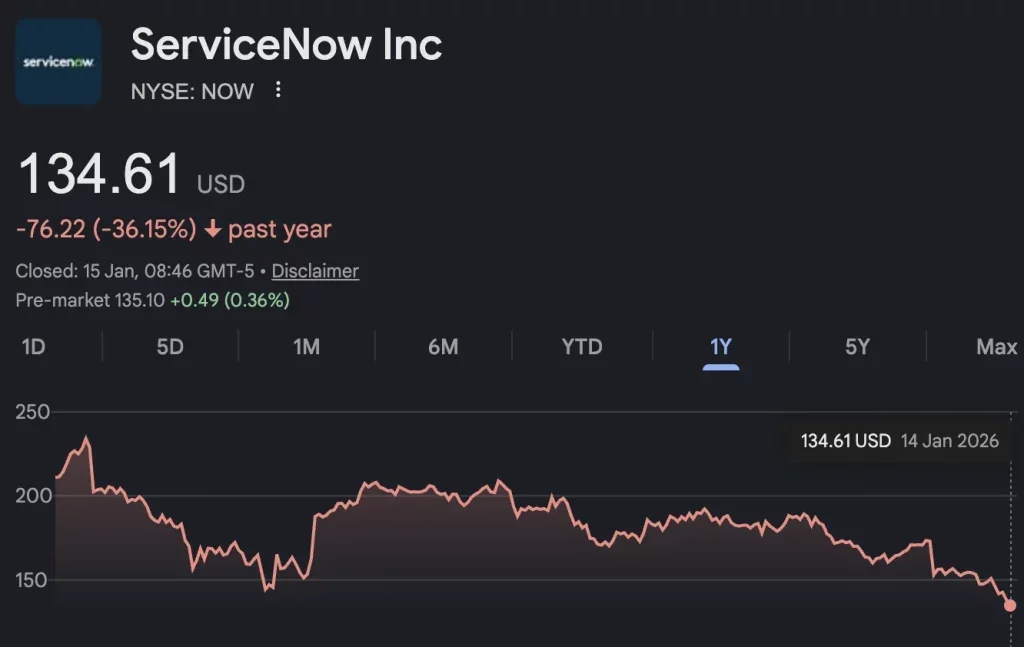
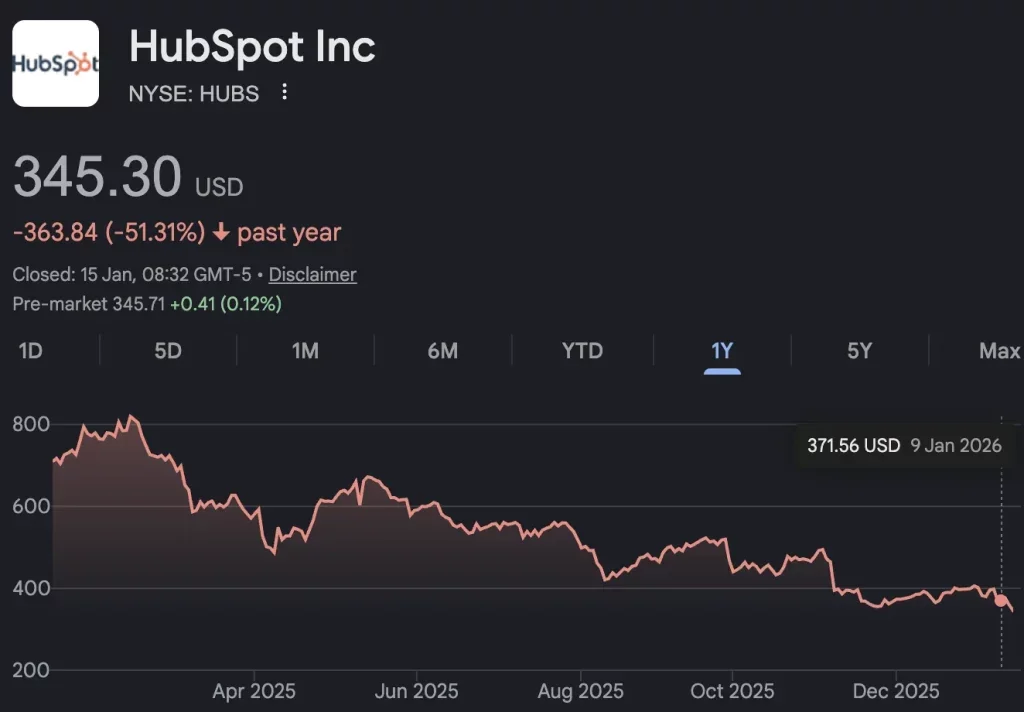
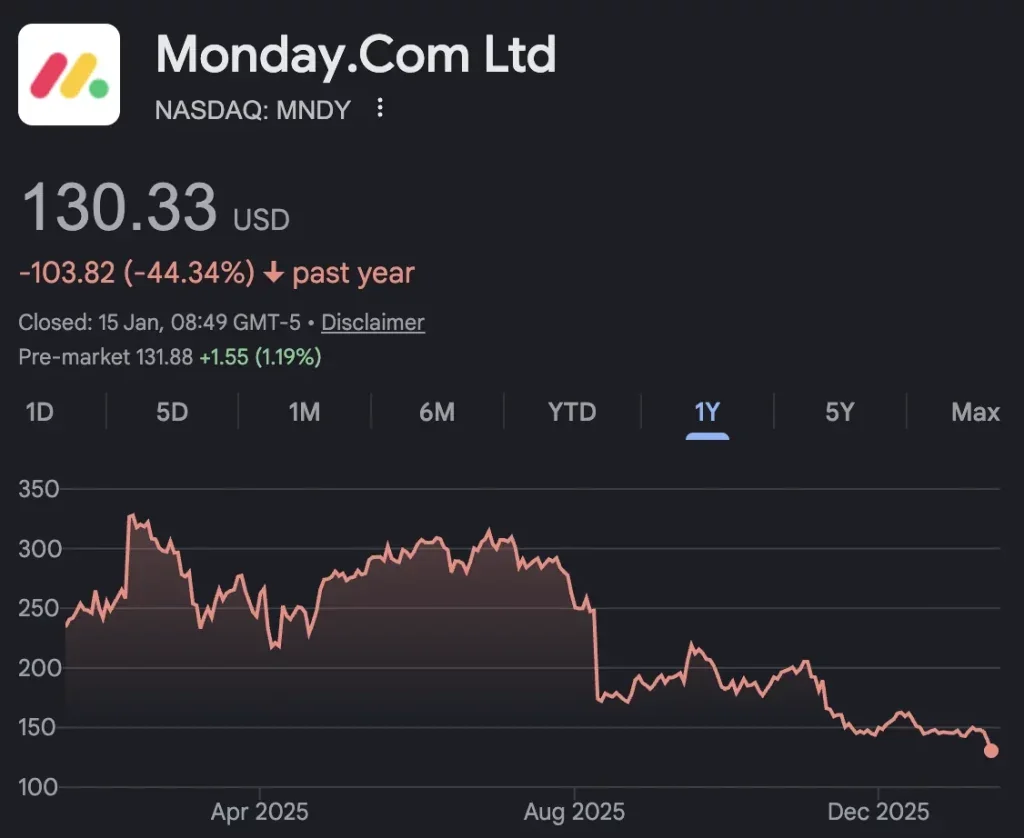
Crm news today salesforce hubspot december 2025
The phrase crm news today salesforce hubspot december 2025 combines several different research intents: historical December 2025 news, current CRM-sector reporting, and comparison between Salesforce and HubSpot. These should not be treated as one event. Check the publication date, the date the reported event occurred, the fiscal period involved, and whether the source is discussing company results or broad software-market sentiment.
For historical analysis, use earnings releases published during the relevant period. Salesforce published its fiscal 2026 third-quarter results on December 3, 2025. For current analysis in July 2026, the later fiscal 2026 full-year and fiscal 2027 first-quarter releases provide more recent company information.
Salesforce sto k: handling ticker and spelling confusion
Salesforce sto k is not a separate security or Salesforce product. It is a spelling variation of Salesforce stock. The listed ticker is CRM, while Salesforce product documentation uses CRM to mean customer relationship management. Confirm the context before interpreting a headline, query, API field, or chart label.
What stock charts do not tell you
- A chart does not explain whether a move resulted from earnings, guidance, rates, sector rotation, an acquisition, or unrelated market conditions.
- A percentage decline does not show whether a stock was expensive or inexpensive before the decline.
- Comparing raw share prices is not meaningful because companies have different share counts and market capitalizations.
- A short time window can hide earlier gains, drawdowns, stock splits, or changes in the business.
- Past performance does not establish a future return.
Checklist for researching Salesforce CRM stock
- Use ticker CRM and verify the exchange and quote timestamp.
- Read the latest earnings release and the corresponding SEC filing.
- Compare actual results with prior guidance, not only with the previous year.
- Review revenue, subscription growth, cRPO, GAAP margin, free cash flow, EPS, and diluted share count.
- Identify acquisition contributions and integration costs.
- Separate product availability claims from disclosed financial contribution.
- Compare Salesforce with peers using consistent periods and metrics.
- Record whether a claim is historical fact, company guidance, analyst estimate, or personal inference.
Related Salesforce learning
Readers who need the platform context behind the business can continue with Salesforce CRM concepts, Salesforce objects and records, Salesforce Data Cloud architecture, and Agentforce in Salesforce.
Frequently Asked Questions
What is the stock symbol for Salesforce?
Salesforce, Inc. trades under the ticker CRM on the New York Stock Exchange. CRM also means customer relationship management, so check whether the context refers to the company share or the software category.
Why is CRM stock down after good earnings?
CRM stock can fall after revenue or earnings increase when guidance, cRPO growth, margins, or another forward-looking measure falls below market expectations. Investors price the expected future business, not only the completed quarter.
What is Salesforce software used for?
Salesforce software is used to manage customer data and processes across sales, service, marketing, commerce, analytics, integration, collaboration, application development, data services, and AI-assisted workflows.
Does Agentforce performance determine Salesforce stock?
No single product determines stock Salesforce performance. Agentforce adoption can affect investor expectations, but the share price also reflects total revenue, renewals, cRPO, margins, cash flow, acquisitions, competition, interest rates, and company guidance.
Where can I find official Salesforce financial results?
Use Salesforce Investor Relations for quarterly results, annual reports, earnings presentations, and SEC filings. These materials are the primary sources for reported financial figures and management guidance.
Editorial note: Market prices change continuously. Verify the current quote, filing date, and fiscal period before using any number from this article.