Does Salesforce Own Slack? Ownership and Acquisition Facts
Does Salesforce own Slack? Yes. Salesforce completed its acquisition of Slack Technologies, Inc. on July 21, 2021. Slack is now part of Salesforce rather than an independent publicly traded company. Salesforce first announced the agreement on December 1, 2020, and valued the transaction at approximately $27.7 billion.
Does Salesforce Own Slack in 2026?
For anyone asking does Salesforce own Slack in 2026, the answer remains yes. Salesforce owns Slack and continues to offer it as a separate product with its own workspaces, plans, administration controls, apps, APIs, and user experience.
Ownership does not mean every Salesforce customer automatically receives every Slack feature. Slack subscriptions, Salesforce editions, application requirements, user permissions, and contract terms still determine which integrations an organization can use. Administrators should treat corporate ownership and product entitlement as separate questions.
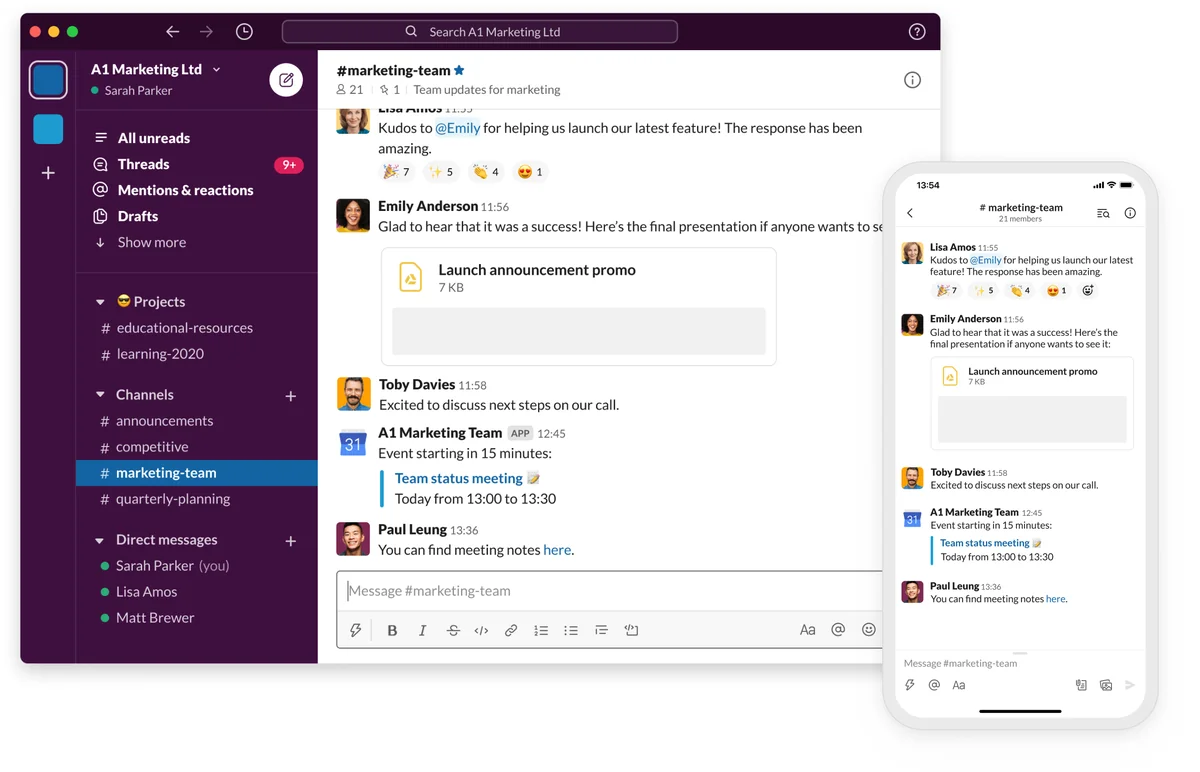
What Was the Slack Salesforce Acquisition?
Slack Salesforce acquisition timeline
| Date | Event | What it meant |
|---|---|---|
| December 1, 2020 | Salesforce signed a definitive agreement to acquire Slack. | The companies announced the proposed transaction, subject to shareholder and regulatory approvals. |
| July 21, 2021 | Salesforce completed the acquisition. | Slack became part of Salesforce after the transaction formally closed. |
| 2021 onward | Salesforce expanded Slack-connected products and workflows. | Supported apps connected CRM records, notifications, approvals, service collaboration, and other workflows with Slack. |
The Slack Salesforce acquisition was one of Salesforce’s largest announced transactions. The official agreement described the purchase price as an enterprise value of approximately $27.7 billion. That amount relates to the transaction announced in 2020; it is not Slack’s current market capitalization because Slack no longer trades as an independent public company.
The official Slack Salesforce acquisition records are available in Salesforce’s definitive agreement announcement and acquisition completion announcement.
When did Salesforce acquire Slack?
The direct answer to when did Salesforce acquire Slack is July 21, 2021. That was the date the transaction formally closed and Slack became part of Salesforce.
Searchers asking when did Salesforce acquire Slack sometimes confuse the closing date with the announcement date. Use December 1, 2020 for the question “When was the acquisition announced?” and July 21, 2021 for “When did Salesforce acquire Slack?”
Why Did Salesforce Buy Slack?
The question does Salesforce own Slack concerns corporate ownership; the reason for the transaction concerns product strategy. The acquisition combined Salesforce’s customer-data and workflow platform with Slack’s channel-based work interface.
In a typical enterprise design, Salesforce remains the system where customer records, permissions, automation, validation rules, and audit history are managed. Slack provides a work surface where users can discuss records, receive alerts, coordinate responses, and perform supported actions.
The preferred architecture is not to copy unrestricted CRM data into Slack. It is to expose only the record context required for a task, preserve Salesforce authorization where supported, and write business changes back to the source system. This design reduces duplicate data and limits accidental disclosure.
How Are Salesforce and Slack Connected Today?
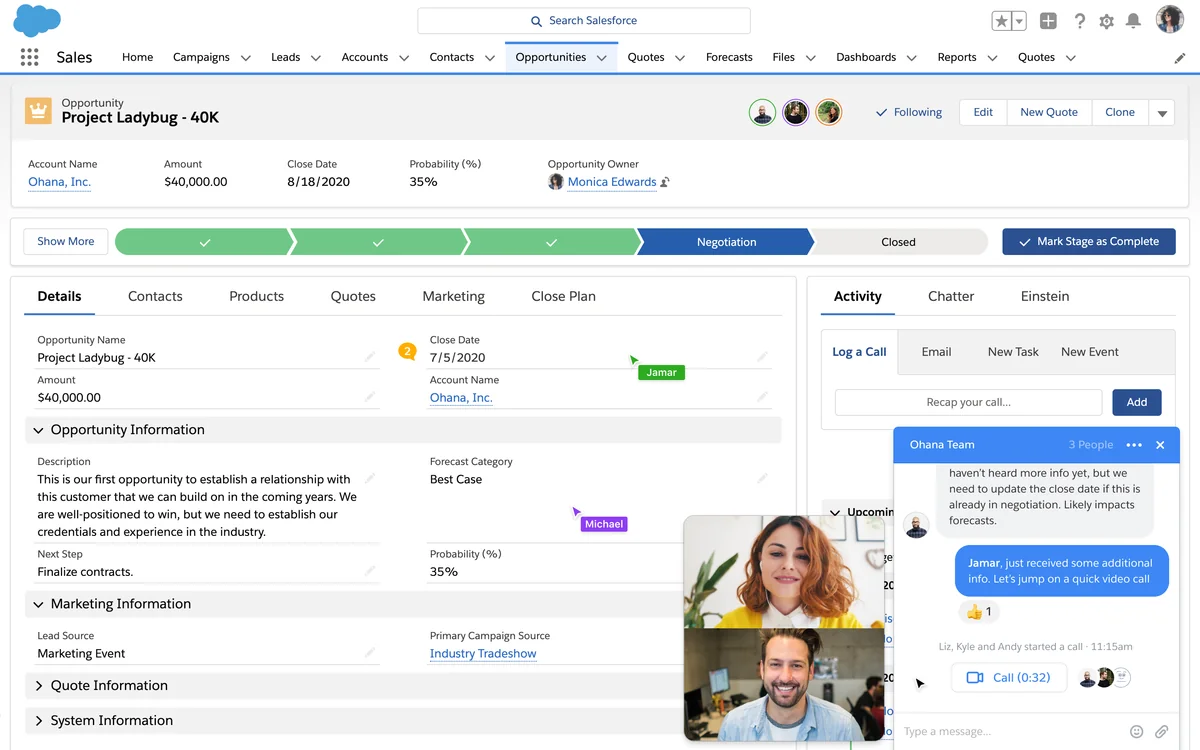
After confirming does Salesforce own Slack, the next practical question is how the products connect. The Slack Salesforce acquisition led to several supported applications and integration patterns rather than one connector that covers every use case.
Salesforce Help currently documents Salesforce for Slack, Sales for Slack, Service Cloud for Slack, Flow actions, approvals, and related features. Availability can depend on the Slack plan, Salesforce product, edition, installed application, workspace configuration, and enabled features.
Sales and CRM collaboration
Supported Salesforce apps can let sales users view or share records, receive pipeline notifications, and coordinate account or opportunity work in Slack. Users normally authenticate to the connected Salesforce org. Salesforce documents shared user mapping in its Salesforce for Slack guide.
Service Cloud swarming
Service Cloud for Slack supports swarming, where an agent brings specialists into a Slack channel to work on a case or incident. Salesforce remains the case system of record, while the Slack channel supports discussion and coordination.
Administrators must install the supported application, connect the required Salesforce org, and assign the documented permissions. See the official Service Cloud for Slack documentation.
Flow actions and Slack notifications
Flow can send messages to Slack through supported actions after an administrator accepts the required Slack terms and installs an official Salesforce Slack app. Before creating automation, define the trigger, destination, message fields, failure handling, and data-classification rules.
Example record-triggered flow design

Object: Case
Trigger: After update
Entry conditions:
  Priority equals High
  Status is changed
Action: Send Slack Message
Destination: Approved support-escalations channel
Message content:
  Case number
  Subject
  Owner
  Salesforce record link
Guardrail:
  Do not include personal, payment, health, or regulated data
This is a configuration pattern rather than Apex code. The official Send Slack Message action reference documents the required setup and action output.
Does Owning Slack Make It Free with Salesforce?
No. A correct answer to does Salesforce own Slack does not imply bundled licensing. Salesforce ownership does not make every Slack plan or integration available with every Salesforce license.
A deployment may require:
- A supported Slack plan and workspace.
- The relevant Salesforce product, license, and edition.
- An official Salesforce application installed in Slack.
- Salesforce-side setup, including My Domain when required.
- Permission sets or application permissions for each user.
- User authentication and mapping between Slack and Salesforce.
- Approval from Salesforce and Slack administrators.
Check current Salesforce documentation and order forms before committing to an architecture. Product packaging can change even though the answer to does Salesforce own Slack remains the same.
What Should Salesforce Admins Check Before Enabling Slack?
- Define the use case. Decide whether users need notifications, record access, approvals, sales collaboration, or service swarming.
- Select the supported app. Do not assume one Slack app covers every Salesforce cloud or workflow.
- Verify identity mapping. Each user must connect to the intended Salesforce org and Slack workspace.
- Apply least-privilege access. Assign only the documented permission sets and verify object, field, and record access.
- Review channel membership. Public, private, shared, and Slack Connect channels can expose information to different audiences.
- Separate test notifications. Sandbox flows should post only to test channels, not production channels.
- Document support ownership. Record who manages the Salesforce org, Slack workspace, installed apps, permissions, and failed automations.
Security and data-access considerations
Salesforce record access continues to depend on organization-wide defaults, role hierarchy, sharing rules, permission sets, object permissions, field-level security, and other applicable controls. However, when a field value is copied into Slack message text, administrators must also rely on Slack channel membership, retention, export, and governance settings.
For multi-user Salesforce content rendered in Slack, Salesforce documents a Slack System User configuration that supports rendering based on user context. Review the official Slack integration user guidance before creating custom Slack experiences.
Does Salesforce Own Slack but Keep It as a Separate Product?
Yes. The answer to does Salesforce own Slack is yes, but Slack retains its own workspaces, plans, administration model, applications, APIs, and interface. Customers can use Slack without implementing Salesforce CRM, and Salesforce customers can use CRM products without moving every collaboration process into Slack.
Since the Slack Salesforce acquisition, enterprise implementations still require governance across both platforms. Salesforce administrators manage CRM metadata, automation, and record access. Slack administrators manage workspace settings, channel access, application approvals, retention, and external collaboration.
How Do Slack, Chatter, and Quip Differ?
Understanding does Salesforce own Slack does not settle which collaboration tool an organization should use. Salesforce also offers Chatter and Quip, but the products serve different purposes.
| Tool | Primary role | Typical use |
|---|---|---|
| Slack | Channel-based messaging and work | Cross-team conversations, alerts, workflows, huddles, and application actions |
| Chatter | Salesforce record and feed collaboration | Following records, posting to feeds, commenting, and collaborating inside Salesforce |
| Quip | Collaborative documents and spreadsheets | Account plans, notes, checklists, and documents connected to business work |
Choose the tool according to the work surface, security requirements, retention policy, and user workflow. See our guides to Salesforce Chatter, Salesforce Quip, and Salesforce Flow automation.
Frequently Asked Questions
Does Salesforce own Slack now?
Yes. Salesforce has owned Slack since the acquisition closed on July 21, 2021. Slack continues as a Salesforce product with its own plans, workspaces, administration controls, and integrations.
When did Salesforce acquire Slack?
Salesforce acquired Slack on July 21, 2021. The proposed Slack Salesforce acquisition was announced earlier, on December 1, 2020.
How much did Salesforce pay for Slack?
Salesforce announced the transaction at an enterprise value of approximately $27.7 billion. The figure comes from the definitive agreement announced on December 1, 2020.
Is Slack included with every Salesforce license?
No. Knowing does Salesforce own Slack does not mean every Slack plan or integration is included with every Salesforce license. Verify the required Slack plan, Salesforce edition, installed applications, and user permissions.
Is Slack replacing Salesforce Chatter?
No. Slack is not a universal one-for-one replacement for Chatter. Slack supports channel-based collaboration across tools, while Chatter provides feeds and record collaboration inside Salesforce.
Conclusion
Does Salesforce own Slack? Yes. The agreement was announced on December 1, 2020, and the acquisition closed on July 21, 2021. For administrators and architects, ownership is only the starting point. A working integration still requires supported licenses, the correct application, identity mapping, permissions, channel governance, and a clear decision about which Salesforce data can appear in Slack.
For related architecture guidance, read our Salesforce integration guide and Salesforce security model tutorial.