Salesforce is a cloud-based Customer Relationship Management (CRM) platform that helps businesses manage customer interactions, sales processes, and marketing campaigns through a web browser. Founded in 1999, Salesforce pioneered the Software-as-a-Service (SaaS) model, eliminating the need for on-premise servers and making enterprise software accessible from anywhere with an internet connection.
As the world’s leading CRM provider with over 20% market share, Salesforce serves companies from small startups to Fortune 500 enterprises. The platform stores customer data, tracks sales opportunities, automates marketing workflows, and provides customer service tools—all integrated into a single system that gives businesses a complete view of their customer relationships.
What Is Salesforce: Core Platform Overview
Salesforce operates as a multi-tenant cloud platform where thousands of organizations share the same infrastructure while maintaining complete data isolation. This architecture allows Salesforce to deliver consistent updates, security patches, and new features to all customers simultaneously without requiring individual installations or maintenance.
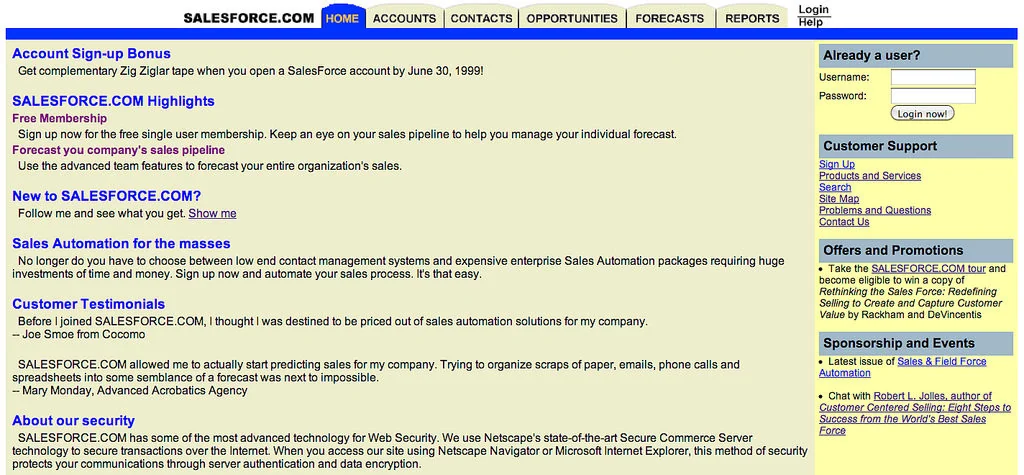
The platform runs entirely in web browsers, mobile apps, and through APIs, making it accessible from any device with internet connectivity. Users log in through their organization’s unique Salesforce instance (like company.salesforce.com) to access their customized environment.
Sales Force Meaning and CRM Fundamentals
The sales force meaning in business context refers to a company’s team of sales representatives and the systems that support them. Salesforce the platform takes this concept further by providing digital tools that enhance every aspect of customer relationship management.
CRM software serves three primary functions:
- Contact Management: Store customer information, communication history, and preferences
- Sales Process Automation: Track leads, opportunities, and deals through defined stages
- Customer Service: Manage support cases, knowledge bases, and service level agreements
Every business needs some form of CRM, whether it’s a simple spreadsheet for a local shop or an enterprise platform for multinational corporations. Salesforce provides the scalability to grow from small business needs to complex enterprise requirements.
Salesforce What Does It Do: Core Products
Salesforce what does it do encompasses multiple cloud products built on a unified platform. Each product addresses specific business functions while sharing the same underlying data model and user interface.
Sales Cloud: Lead and Opportunity Management
Sales Cloud manages the complete sales cycle from initial lead capture to closed deals. Key features include:
- Lead scoring and assignment rules
- Opportunity pipeline management with customizable stages
- Quote generation and approval workflows
- Sales forecasting and territory management
- Activity tracking and task automation
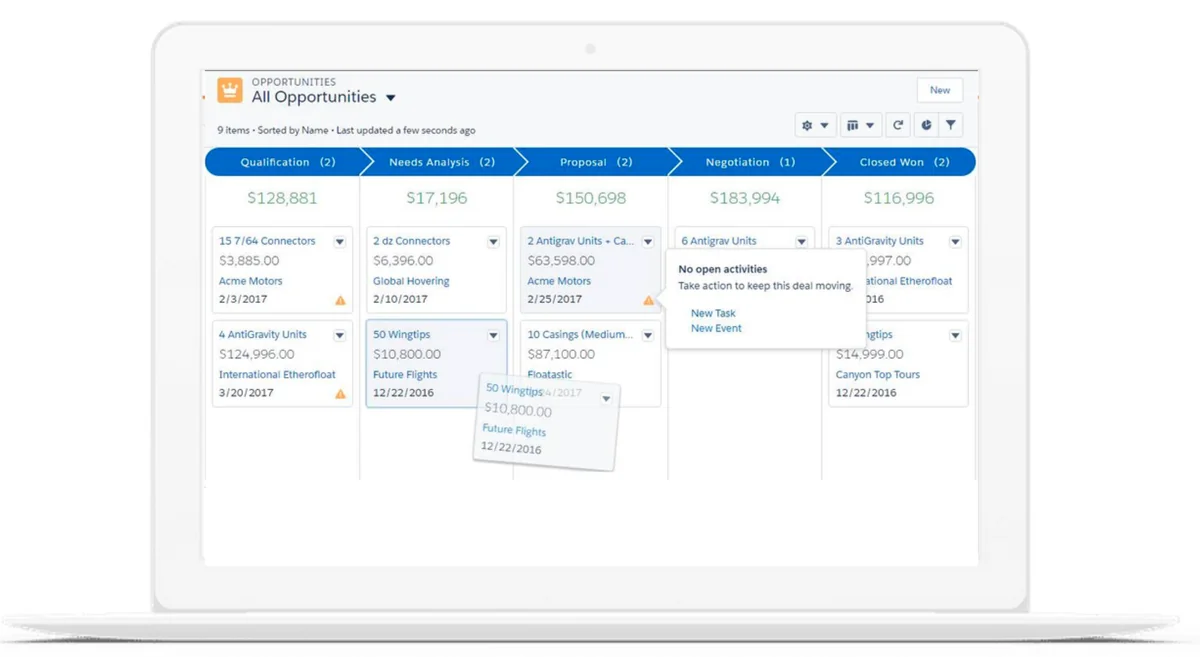
Sales teams use Sales Cloud to track every customer interaction, from initial contact through contract signing. The platform automatically captures email communications, meeting notes, and phone call logs to maintain complete activity histories.
Service Cloud: Customer Support Platform
Service Cloud transforms customer support operations through case management, knowledge bases, and omnichannel communication tools:
- Case routing and escalation rules
- Live chat and messaging integration
- Self-service portals and community forums
- Service level agreement (SLA) monitoring
- Field service scheduling and mobile workforce management
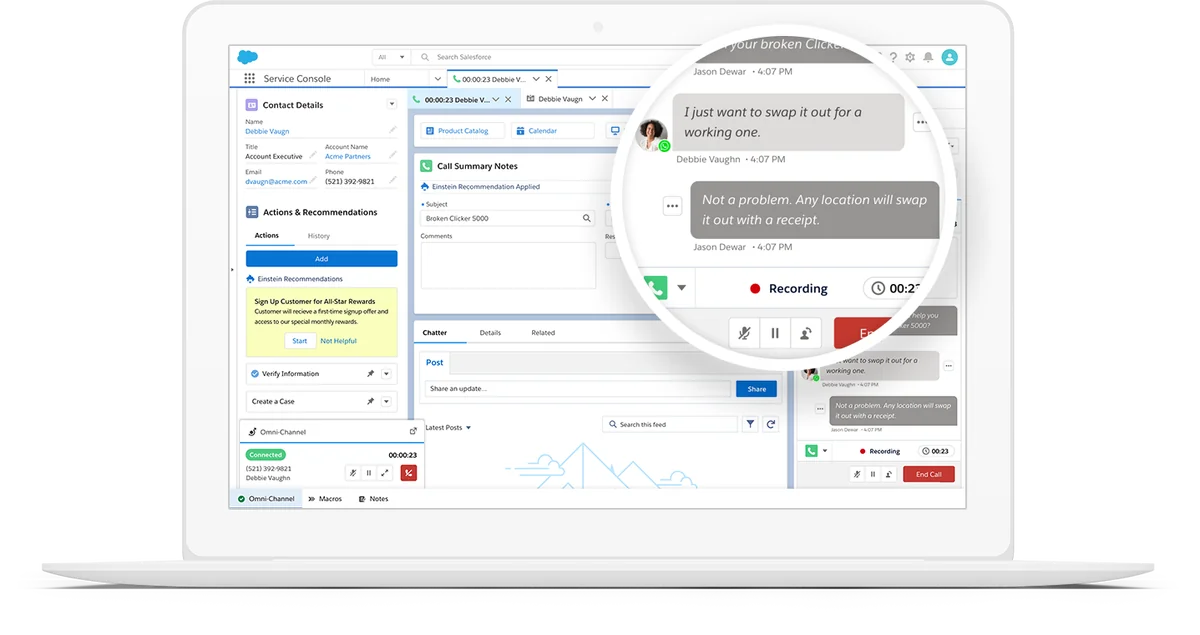
Support agents access complete customer histories, previous cases, and product information to resolve issues efficiently. The platform tracks response times, resolution rates, and customer satisfaction scores.
Marketing Cloud: Digital Marketing Automation
Marketing Cloud enables personalized customer journeys across email, SMS, social media, and advertising channels:
- Email campaign design and automation
- Customer journey mapping and triggered messaging
- Social media monitoring and publishing
- Advertising audience creation and management
- Marketing analytics and attribution reporting
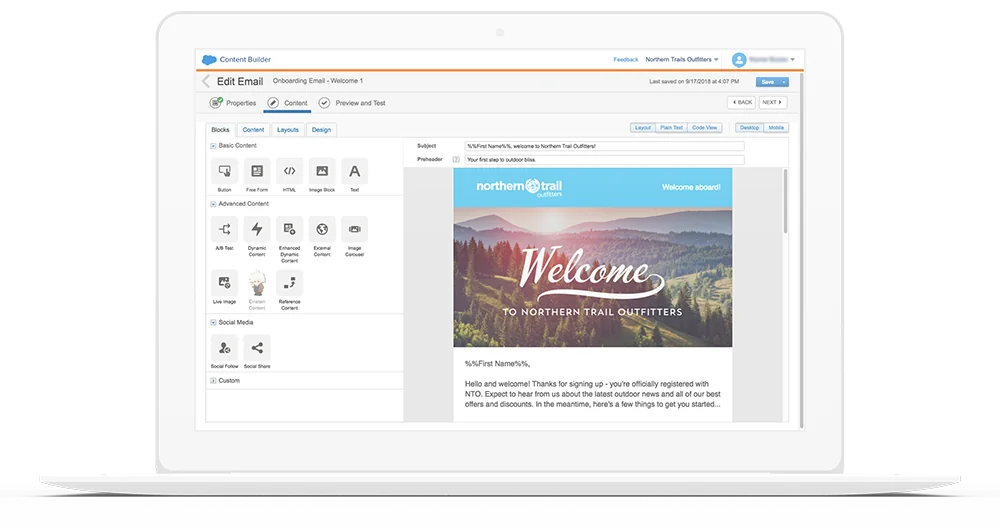
Marketing teams create targeted campaigns based on CRM data, tracking engagement metrics and lead generation performance. The platform integrates with Sales Cloud to pass qualified leads directly to sales representatives.
Salesforce Definition: Platform Architecture
The Salesforce definition extends beyond traditional CRM to encompass a complete application development platform. Organizations can build custom applications using declarative tools (point-and-click configuration) or programmatic development (Apex code and Lightning Web Components).
Lightning Platform: Custom Application Development
The Lightning Platform provides the foundation for all Salesforce applications, offering:
- Custom objects and fields for unique business requirements
- Workflow rules and process automation
- Custom user interfaces and page layouts
- Integration APIs and web services
- Security controls and data governance
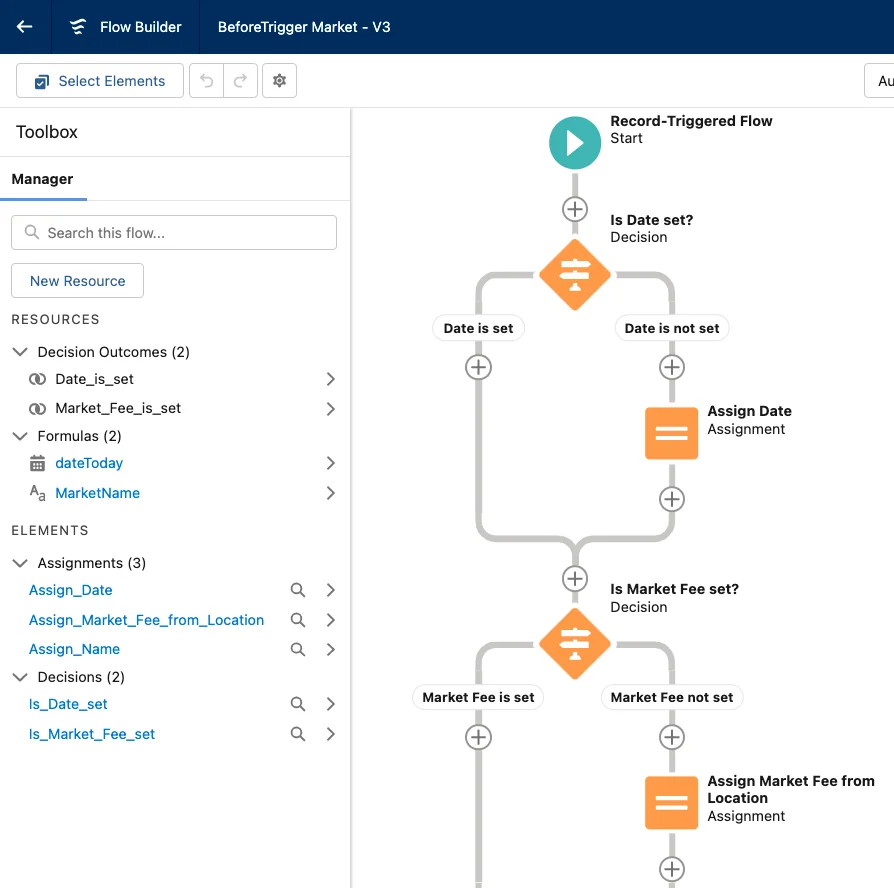
Administrators use Flow Builder to create automated processes without coding, while developers can build complex applications using Salesforce’s proprietary programming languages and frameworks.
AppExchange: Third-Party Integrations
The AppExchange marketplace contains over 5,000 pre-built applications and integrations that extend Salesforce functionality:
- Industry-specific solutions (healthcare, financial services, manufacturing)
- Productivity tools (document management, project management)
- Integration connectors (ERP systems, accounting software)
- Analytics and reporting enhancements
- Mobile and IoT applications
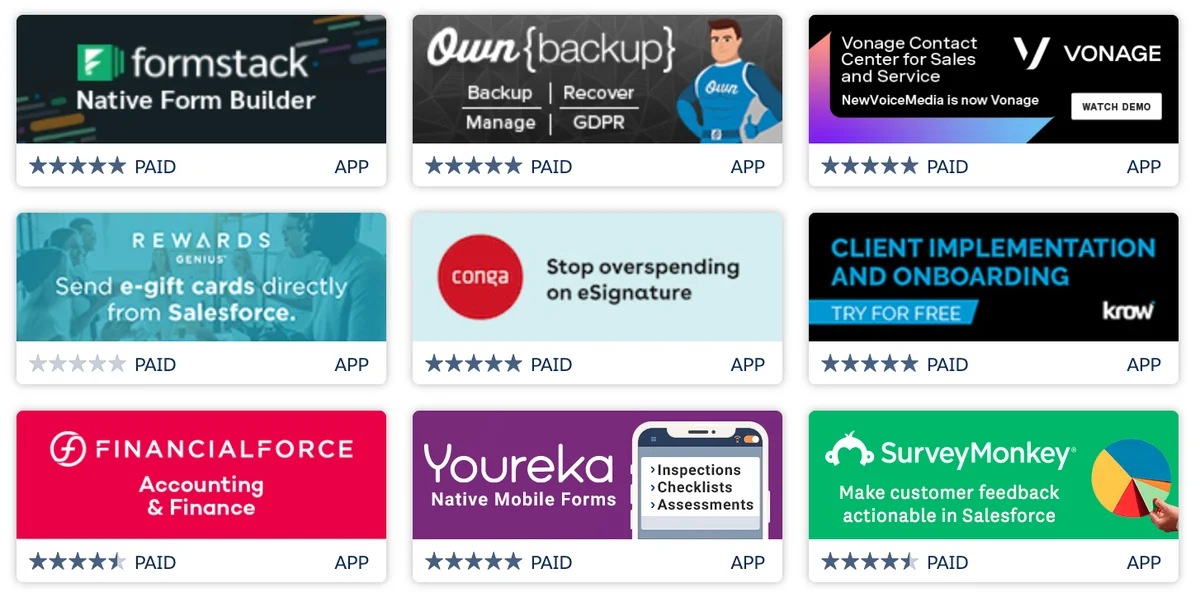
Organizations can install AppExchange solutions directly into their Salesforce org, often requiring minimal configuration to integrate with existing data and processes.
What Type of Software Is Salesforce: Technical Architecture
What type of software is Salesforce can be categorized as a multi-tenant, cloud-native platform-as-a-service (PaaS) with software-as-a-service (SaaS) applications. This architecture provides several advantages:
Multi-Tenant Cloud Infrastructure
- Shared Resources: Multiple organizations share the same application instances while maintaining data isolation
- Automatic Updates: Salesforce releases three major updates annually (Spring, Summer, Winter) with new features and security patches
- Scalability: Infrastructure automatically scales to handle varying workloads and user volumes
- Global Availability: Data centers worldwide provide low-latency access and disaster recovery
Security and Compliance
Salesforce maintains enterprise-grade security through:
- SOC 2 Type II and ISO 27001 certifications
- Industry-specific compliance (HIPAA, GDPR, FedRAMP)
- Encryption at rest and in transit
- Multi-factor authentication and single sign-on
- Granular permission controls and data sharing rules
Mobile and Modern User Experience
The Salesforce Mobile App provides full platform functionality on iOS and Android devices. Users can access the same data, run reports, and execute business processes from mobile devices as they would from desktop browsers.
Lightning Experience, Salesforce’s modern user interface, offers:
- Responsive design that adapts to different screen sizes
- Drag-and-drop page customization
- Einstein AI recommendations and insights
- Voice commands and accessibility features
- Real-time collaboration tools
Integration Capabilities
Salesforce connects with external systems through multiple integration methods:
- REST and SOAP APIs: Real-time data synchronization with external applications
- Bulk API: High-volume data imports and exports
- Streaming API: Real-time event notifications
- Connect REST API: Social features and community integration
- MuleSoft Anypoint Platform: Enterprise integration platform for complex data flows
Frequently Asked Questions
What is Salesforce used for in small businesses?
Small businesses use Salesforce to manage customer contacts, track sales opportunities, automate follow-up emails, and provide customer support. The platform scales from basic contact management to advanced sales automation as businesses grow.
How much does Salesforce cost?
Salesforce pricing starts at $25 per user per month for Essentials edition, with Professional ($80), Enterprise ($165), and Unlimited ($330) editions offering additional features. Marketing Cloud and other specialized products have separate pricing structures.
What is the difference between Salesforce and traditional CRM software?
Traditional CRM requires on-premise servers, IT maintenance, and manual updates. Salesforce operates entirely in the cloud, provides automatic updates, and offers extensive customization without requiring technical infrastructure.
Can Salesforce integrate with other business software?
Yes, Salesforce integrates with thousands of business applications through APIs, AppExchange connectors, and third-party integration platforms like MuleSoft. Common integrations include accounting systems, email marketing tools, and ERP platforms.
What skills do I need to use Salesforce effectively?
Basic Salesforce usage requires familiarity with web applications and CRM concepts. Advanced customization benefits from understanding business processes, data modeling, and workflow automation. Salesforce provides extensive training through Trailhead, their free learning platform.