A salesforce marketing cloud consultant designs campaign, data, consent, audience, and journey solutions in Marketing Cloud Engagement. Many admins search this topic while comparing it with the Sales Cloud Consultant credential, so this guide separates the two paths and explains where they overlap in real Salesforce implementations.
In enterprise orgs, the overlap matters. Marketing teams depend on Contacts, subscribers, journeys, consent, and campaign performance. Sales teams depend on Leads, Accounts, Contacts, Opportunities, Quotes, forecasts, and pipeline reports. A consultant who understands both sides can prevent broken handoffs between campaign activity and revenue operations.
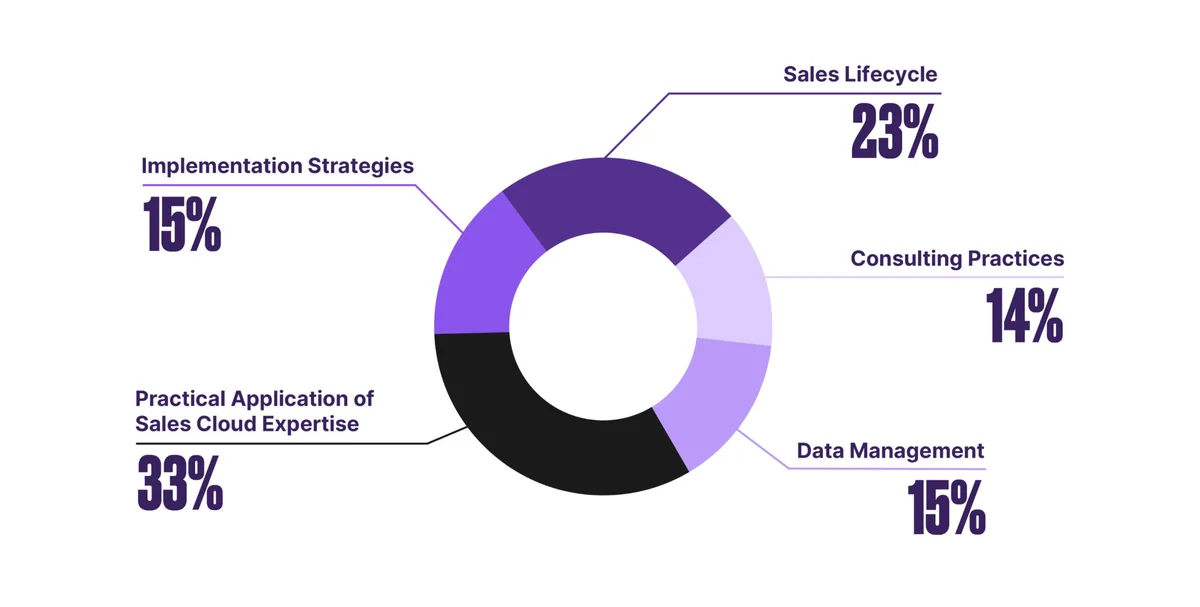
Salesforce Marketing Cloud Consultant: what does the role cover?
A salesforce marketing cloud consultant works with stakeholders to translate campaign and lifecycle requirements into Marketing Cloud Engagement design. Typical work includes Contact Builder data modeling, segmentation, Automation Studio, Journey Builder, send governance, suppression logic, preference management, and reporting. Salesforce currently labels the credential path as Salesforce Certified Marketing Cloud Engagement Consultant on Trailhead.
This role is not the same as Sales Cloud Consultant. Marketing Cloud work can still depend on Sales Cloud when campaigns create Leads, update Campaign Members, use Contact or Account fields for segmentation, or report Opportunity revenue back to marketing. In those cases, the salesforce marketing cloud consultant should know enough Sales Cloud to ask correct data and ownership questions before building journeys.
| Area | Marketing Cloud Consultant focus | Sales Cloud Consultant focus |
|---|---|---|
| Primary users | Marketers, campaign operations, lifecycle teams | Sales reps, managers, revenue operations |
| Core data | Subscribers, contacts, data extensions, consent, journeys | Leads, Accounts, Contacts, Opportunities, Products, Quotes |
| Main risk | Bad subscriber key, consent gaps, over-contacting | Bad routing, duplicate Accounts, poor forecast hygiene |
| Architecture question | How should CRM data enter campaigns and journeys? | How should the sales process move from lead to revenue? |
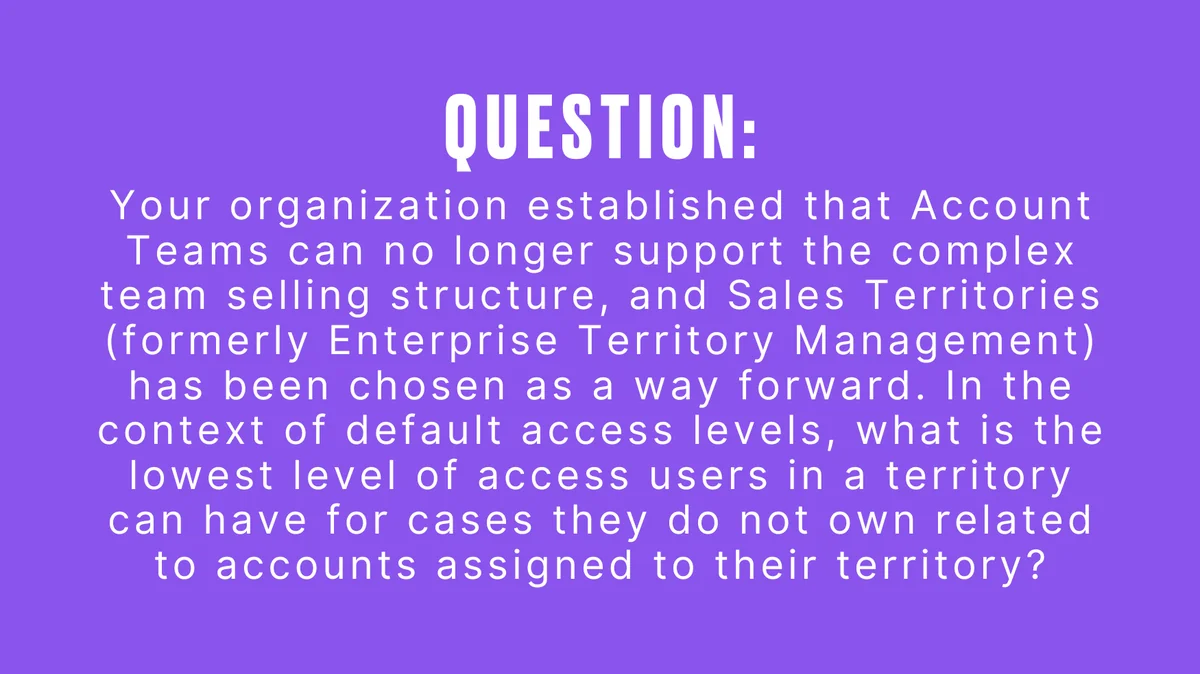
How do Marketing Cloud Consultant and Sales Cloud Consultant differ?
The names sound close, but the credentials test different work. A salesforce marketing cloud consultant prepares for Marketing Cloud Engagement implementation topics. A Sales Cloud Consultant candidate prepares for Sales Cloud process design, security, analytics, data management, and consulting scenarios.
Certified sales cloud consultant path
The certified sales cloud consultant path is for people who design and implement Sales Cloud solutions. Salesforce lists Salesforce Certified Platform Administrator as a prerequisite for the Sales Cloud Consultant credential. A certified sales cloud consultant should be ready to explain why a project uses role hierarchy, sharing rules, Account Teams, Opportunity Teams, Sales Territories, or a combination.
Sales cloud consultant certification scope
The sales cloud consultant certification tests whether you can convert business requirements into maintainable Sales Cloud design. Before scheduling, verify the current exam facts on Salesforce-owned pages: prerequisite, release alignment, question count, time limit, passing score, fees, delivery options, and maintenance requirements. Salesforce can revise exam guides by release.
Salesforce sales cloud certification fit
Salesforce sales cloud certification fits admins, business analysts, consultants, and architects who work with lead conversion, opportunity stages, products, price books, quoting, forecasting, dashboards, duplicate prevention, and sales adoption. It is less useful if your work is limited to Marketing Cloud email operations and never touches CRM sales data.
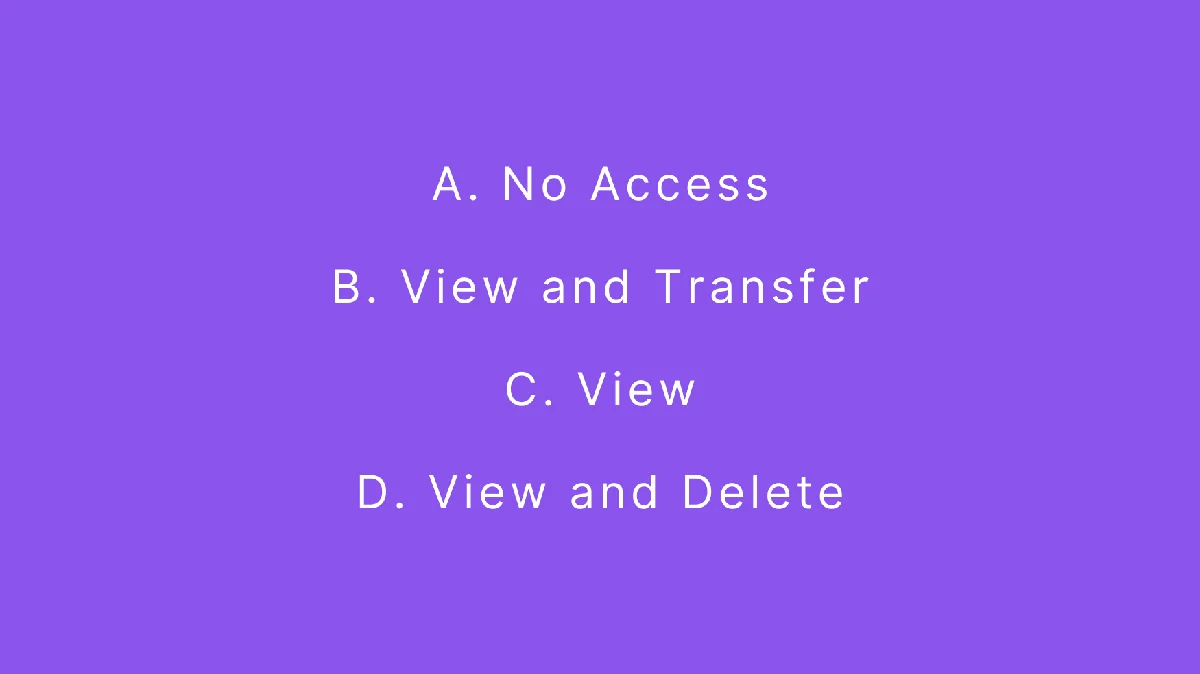
What should a salesforce marketing cloud consultant know about Sales Cloud?
A salesforce marketing cloud consultant does not need to own every Sales Cloud setting, but should understand the objects that affect campaign handoff, segmentation, attribution, and suppression. The most common integration points are Lead, Contact, Account, Campaign, Campaign Member, Opportunity, and sometimes Person Account.
| Sales Cloud concept | Why it matters to Marketing Cloud | Question to ask |
|---|---|---|
| Lead Source | Campaign reporting often depends on the first captured source | Will integrations set it, or can users edit it? |
| Campaign Member Status | Journeys and attribution need consistent response values | Are statuses standardized by campaign type? |
| Lead Conversion | Journeys must not message the wrong lifecycle state | Which fields map to Account, Contact, and Opportunity? |
| Duplicate Rules | Duplicate Leads and Contacts damage reporting and trust | Which matching rules run before imports and API writes? |
| Opportunity Stage | Revenue journeys and suppression rules may depend on stage | Which stages show real buying intent? |
For related SalesforceTutorial reading, review Lead Source in Salesforce, Salesforce Opportunity Stages, and Salesforce data migration planning.
Certified sales cloud consultant exam facts to verify
A certified sales cloud consultant candidate should start with the official Salesforce credential page and exam guide, not old screenshots or copied score tables. In production consulting, the same discipline applies: confirm the source of truth before making design decisions.
| Exam item | Why it matters | Where to verify |
|---|---|---|
| Prerequisite | You may not be eligible until the prerequisite credential is earned | Trailhead credential page |
| Release alignment | Questions can reflect labels and features from a stated release | Salesforce Help exam guide |
| Passing score | Scores can vary by credential and language | Salesforce Help exam guide |
| Maintenance | Credentials require release maintenance | Trailhead certification maintenance |

How to prepare for the sales cloud consultant certification
Prepare for the sales cloud consultant certification by building a practice org that behaves like a revenue system. Do not stop at reading feature names. Configure a small B2B sales process and explain why each setting exists.
- Start with discovery. Document sales stages, qualification rules, handoff points, KPIs, and data owners.
- Configure the lifecycle. Build Leads, lead conversion mapping, Accounts, Contacts, Opportunity stages, Products, Price Books, and Quotes if the scenario needs quoting.
- Design access. Compare organization-wide defaults, role hierarchy, sharing rules, teams, queues, and territories before changing record access.
- Control data quality. Test validation rules, duplicate rules, matching rules, imports, and integration upserts.
- Measure adoption. Build reports for stale opportunities, stage aging, conversion rates, activities, and forecast changes.
- Deploy safely. Use sandboxes, test plans, release notes, user training, and a rollback plan.
The sales cloud consultant certification rewards scenario reasoning. For example, if a sales manager wants regional visibility, do not jump directly to custom Apex. First evaluate standard security and Sales Territories. If the standard model solves the access, reporting, and maintenance requirements, keep the solution declarative.
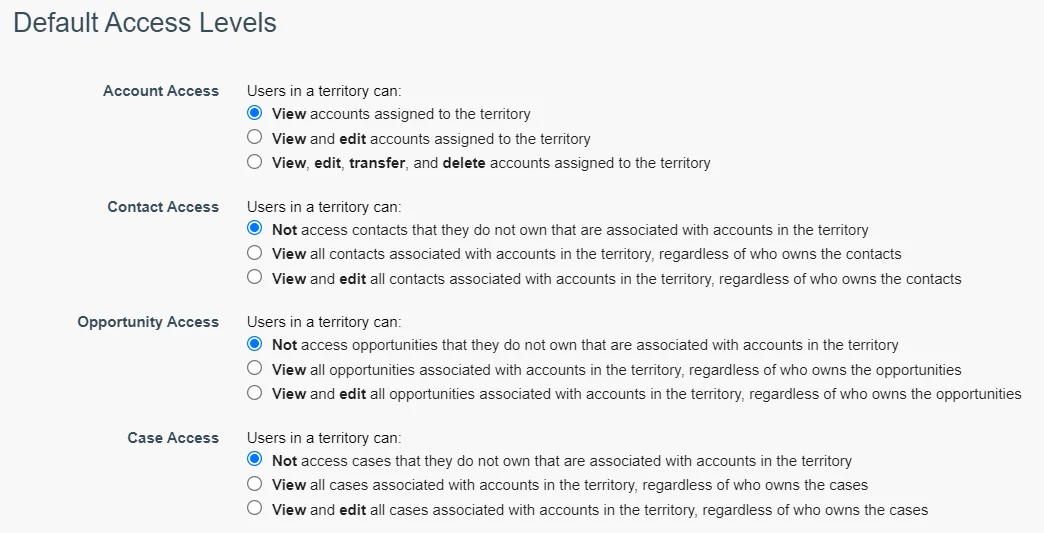
What implementation topics matter for Salesforce Sales Cloud certification?
Salesforce sales cloud certification preparation should include the implementation choices that create support tickets after go-live: unclear ownership, weak data quality, overbuilt automation, missing reports, and poor training.
Sales lifecycle design
Map each Opportunity stage to entry criteria, exit criteria, probability, forecast category, required fields, and manager review points. For salesforce sales cloud certification study, explain what a rep must do at each stage and what a manager expects to see in reports.
Data management and duplicate prevention
Data quality starts before migration. Build a source-to-target mapping sheet, identify external IDs, document deduplication logic, and test real edge cases. Duplicate rules define what happens when Salesforce finds possible duplicates; matching rules define how those possible matches are found.
Security and sharing
Use the simplest access model that meets the requirement. Organization-wide defaults set the baseline. Role hierarchy, sharing rules, manual sharing, teams, territories, and Apex managed sharing extend access. A certified sales cloud consultant should explain why the model remains maintainable after go-live.
Apex example for a consultant-facing pipeline check
Most Sales Cloud work should start with configuration, Flow, reports, and dashboards. Use Apex only when a requirement needs code. The example below gives a salesforce marketing cloud consultant or Sales Cloud consultant a safe pattern for summarizing open pipeline by stage. It uses one aggregate SOQL query, checks object and field access before querying, and avoids SOQL inside loops. The pattern compiles in current API versions, including API v60.0 and later, but you should compile and test it on your org current API version.
public with sharing class SalesPipelineSnapshotService { public class StageSummary { @AuraEnabled public String stageName; @AuraEnabled public Integer openDealCount; @AuraEnabled public Decimal pipelineAmount; public StageSummary(String stageName, Integer openDealCount, Decimal pipelineAmount) { this.stageName = stageName; this.openDealCount = openDealCount; this.pipelineAmount = pipelineAmount; } } @AuraEnabled(cacheable=true) public static List<StageSummary> getOpenPipelineByStage() { if (!Schema.sObjectType.Opportunity.isAccessible() || !Schema.sObjectType.Opportunity.fields.StageName.isAccessible() || !Schema.sObjectType.Opportunity.fields.Amount.isAccessible() || !Schema.sObjectType.Opportunity.fields.IsClosed.isAccessible()) { throw new AuraHandledException('You do not have access to pipeline summary fields.'); } List<StageSummary> summaries = new List<StageSummary>(); for (AggregateResult row : [SELECT StageName, COUNT(Id) dealCount, SUM(Amount) pipelineAmount FROM Opportunity WHERE IsClosed = false GROUP BY StageName ORDER BY StageName ASC]) { summaries.add(new StageSummary((String) row.get('StageName'), (Integer) row.get('dealCount'), (Decimal) row.get('pipelineAmount'))); } return summaries; } }Governor limit note: the method uses one SOQL query regardless of the number of Opportunity records summarized. It still depends on caller sharing and field permissions. Salesforce requires Apex tests before deployment to production; Trailhead states that at least 75% of Apex code must be covered by tests and all tests must pass.
@IsTest private class SalesPipelineSnapshotServiceTest { @IsTest static void returnsOpenPipelineByStage() { insert new Opportunity(Name = 'ACME New Business', StageName = 'Prospecting', CloseDate = Date.today().addDays(30), Amount = 25000); Test.startTest(); List<SalesPipelineSnapshotService.StageSummary> rows = SalesPipelineSnapshotService.getOpenPipelineByStage(); Test.stopTest(); System.assertEquals(1, rows.size(), 'One open stage should be returned.'); System.assertEquals('Prospecting', rows[0].stageName); System.assertEquals(1, rows[0].openDealCount); } }
Best practices for a salesforce marketing cloud consultant working with Sales Cloud teams
A salesforce marketing cloud consultant can reduce rework by asking Sales Cloud questions early. The mistake is to treat Marketing Cloud data as separate from CRM data when the business wants revenue reporting, suppression, segmentation, or sales follow-up.
- Confirm the system of record. Decide whether CRM, Marketing Cloud Engagement, Data Cloud, or another platform owns each field.
- Document identity keys. Subscriber Key, Contact Id, Lead Id, Person Account Id, and external IDs must be mapped before journeys go live.
- Protect consent. Consent fields and suppression logic must be tested with opt-out and regional examples.
- Align handoff timing. Sales should know when a campaign response creates a Lead, updates a Campaign Member, or triggers a task.
- Keep automations observable. Use logs, reports, and error queues so admins can troubleshoot without reading code.
This is where the sales cloud consultant certification mindset helps. Instead of asking only how to send a campaign, ask how the resulting Lead will be routed, converted, reported, and protected from duplicates.
Common errors with Sales Cloud and Marketing Cloud consultant projects
| Error | Impact | Better approach |
|---|---|---|
| Using email as the only identity key | Shared inboxes and duplicate contacts break history | Use a stable CRM or external key and document exceptions |
| Letting every integration create Leads | Sales reps stop trusting queues | Define update-versus-create rules and matching logic |
| Automating every request with code | Admins cannot maintain simple changes | Use standard features and Flow first, then Apex for gaps |
| Building reports after go-live | Missing fields hide project value | Define KPIs during discovery and test reports before launch |
If you are studying for salesforce sales cloud certification, turn each error into a scenario question and identify the standard Salesforce feature that solves the requirement with the least maintenance risk.
Study plan for both consultant paths
Use this four-week plan if you are a salesforce marketing cloud consultant who needs Sales Cloud fluency, or an admin preparing for the certified sales cloud consultant credential.
| Week | Marketing Cloud focus | Sales Cloud focus | Deliverable |
|---|---|---|---|
| 1 | Contact model, subscriber key, consent fields | Lead Source, Lead Status, conversion mapping | Lifecycle diagram |
| 2 | Audience segmentation and journey entry rules | Opportunity stages, products, price books, quotes | Lead-to-revenue test script |
| 3 | Suppression and failure handling | Duplicate rules, validation rules, forecasting | Data quality checklist |
| 4 | Campaign reporting and handoff monitoring | Dashboards, adoption reports, deployment plan | Go-live checklist |
For more background, use Salesforce Flow best practices and Salesforce Admin role guide. Both support the salesforce sales cloud certification skills consultants use after the exam.
Frequently Asked Questions
Is Salesforce Marketing Cloud Consultant the same as Sales Cloud Consultant?
No. Salesforce Marketing Cloud Consultant usually refers to the Marketing Cloud Engagement Consultant path, while Sales Cloud Consultant is a separate Salesforce credential for sales process design. This article compares both because many search queries mix the names.
Do I need Administrator before the Sales Cloud Consultant exam?
Yes. Salesforce lists Salesforce Certified Platform Administrator as a prerequisite for the Sales Cloud Consultant credential. Check the official credential page before booking because requirements can change by release.
What should I build before attempting the sales cloud consultant certification?
Build a practice org with lead capture, duplicate rules, lead conversion, opportunity stages, products, price books, quotes, forecasting, reports, and at least one deployment path from sandbox to production. The sales cloud consultant certification tests how these choices fit a scenario.
How is Salesforce Sales Cloud certification different from Administrator?
Administrator tests broad platform setup. Salesforce Sales Cloud certification focuses on sales lifecycle decisions, lead handling, opportunity design, forecasting, territory access, pipeline reporting, change management, and consulting judgement.
Should a Marketing Cloud consultant learn Sales Cloud?
Yes, when campaigns, leads, account data, or opportunity revenue connect to marketing journeys. A salesforce marketing cloud consultant does not need to own every Sales Cloud setting, but should understand Lead, Contact, Account, Campaign, and Opportunity data enough to design a safe handoff.