PDO Meaning in Salesforce and Work Contexts
PDO can mean different things depending on where you see it. In Salesforce, a PDO is a Product Development Outsourcer: a partner or vendor that helps ISVs build commercial products for AgentExchange, AppExchange-style listings, managed packages, integrations, and marketplace security review. In HR or workplace messages, pdo meaning work usually refers to paid day off, personal day off, or a company-specific leave code.
This guide explains what does pdo stand for, how the salesforce pdo meaning differs from the workplace meaning, and what technical work a product development partner should handle before a Salesforce product is published.
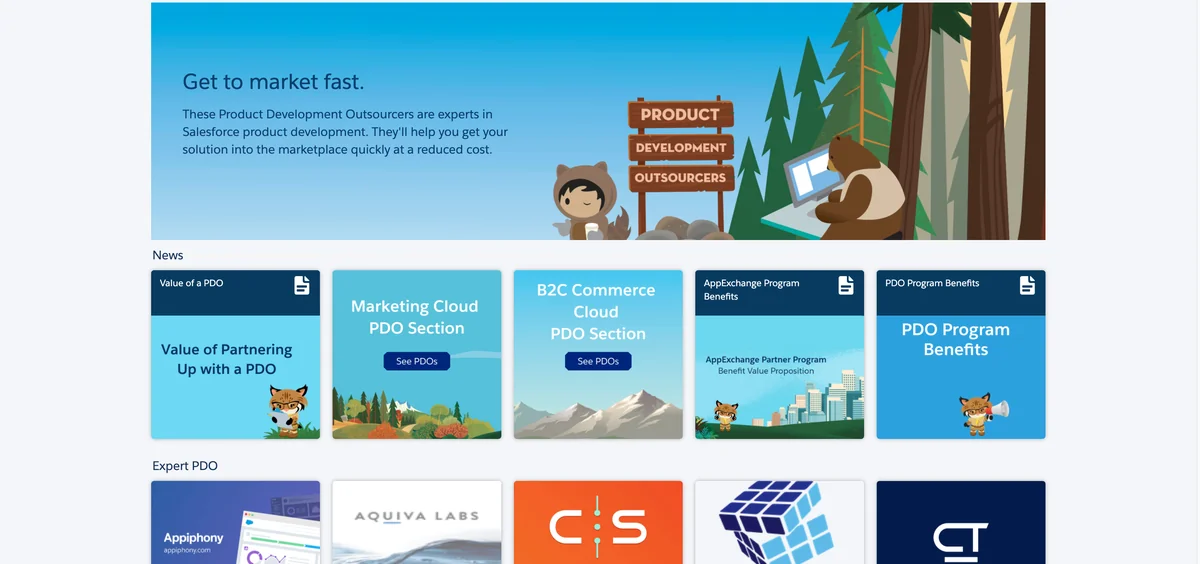
PDO: Salesforce meaning and work meaning
The abbreviation is easy to misread because it appears in two different business contexts. Salesforce partner documentation describes Product Development Outsourcers as consulting partners and vendors with expertise in building commercial apps and related services such as training, support, marketing, or selling. See Salesforce’s official Product Development Outsourcers page.
What does pdo stand for in Salesforce?
In Salesforce, the abbreviation stands for Product Development Outsourcer. A product development partner works with an ISV, startup, enterprise product team, or consulting partner that wants to build a packaged product, agent, component, integration, or consulting solution for Salesforce customers. Current Salesforce marketplace documentation uses AgentExchange for the unified marketplace of apps, agents, components, and consulting services. Salesforce explains this in the official AgentExchange guide.
Pdo meaning work: how HR usage is different
pdo meaning work usually points to a leave category, not a Salesforce partner. In a time-off request, payroll export, or manager message, pdo may mean paid day off, personal day off, planned day off, or another label defined by the employer. Always check the company policy because the abbreviation is not universal.
Salesforce pdo: why ISVs use the term
A salesforce pdo matters when the solution must work in many subscriber orgs, not only one customer org. Marketplace products must handle namespace behavior, package upgrades, permission sets, custom metadata, external endpoints, customer-specific automation, and security review evidence. A normal implementation team may know Sales Cloud or Service Cloud well, but a marketplace product needs product packaging and review experience.
| Context | Meaning | Who uses it | What to verify |
|---|---|---|---|
| HR or payroll | Paid day off, personal day off, or another leave code | Employees and managers | Employer policy |
| Salesforce ISV delivery | Product Development Outsourcer | ISVs, architects, product owners | Packaging, security review, and release experience |
| Customer implementation | Usually not the main term | System integrators and admins | Whether the project is a one-org implementation or a commercial product |
How does a salesforce pdo help build a product?
A salesforce pdo helps convert a roadmap into an installable product. The work often includes architecture, managed packaging, Apex and LWC development, integration design, automated testing, security review preparation, setup documentation, trial org setup, demo data, and release operations. A small ISV may use the partner as the main engineering team. A larger company may use one for a specific workstream, such as packaging migration or security remediation.
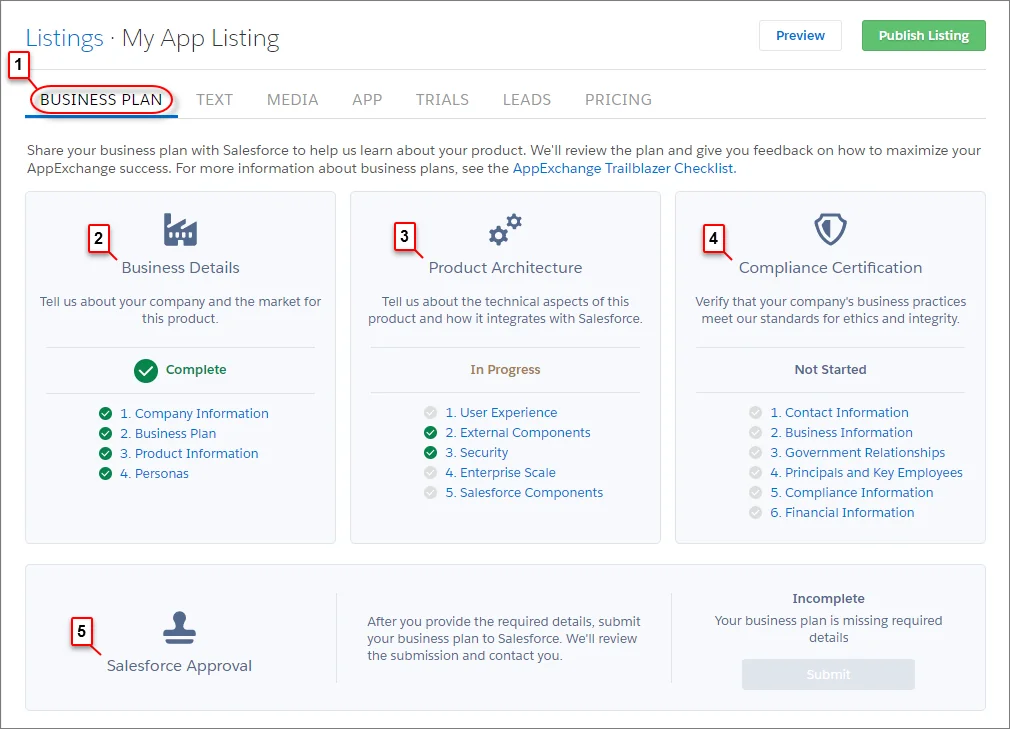
Core product delivery workstreams
- Architecture: define package boundaries, namespace strategy, extension points, data retention rules, and subscriber org assumptions.
- Managed packaging: build metadata, Apex, Lightning Web Components, flows, permission sets, and custom metadata that can ship to customer orgs.
- Integration: design OAuth, named credentials, tenant mapping, callout retries, logging, and endpoint documentation.
- Release operations: create package versions, test installation, document upgrade behavior, and prepare customer-facing release notes.
When should an ISV involve a Product Development Outsourcer?
Bring the partner in before the first package version if your team has limited marketplace experience. Retrofitting package boundaries after several sprints can create avoidable rework. For example, renaming a custom object or changing a global Apex contract is simple in a prototype but risky after customers install a managed package version.
Use a partner selection checklist when the product is moving from one customer org into a commercial product. The partner should identify what belongs inside the package, what must remain configurable, what should be externalized, and what must be removed before security review.
| Situation | Partner value | Risk if ignored |
|---|---|---|
| New ISV product | Design package structure, install flow, and permissions early. | Namespace, dependency, and upgrade rework. |
| Security review failure | Map findings to Apex, LWC, integration, and documentation fixes. | Repeated submissions with the same root cause. |
| External SaaS integration | Design authentication, logging, and data deletion behavior. | Customer procurement delays and review questions. |
| 1GP or 2GP strategy | Plan source-driven packaging and package version lifecycle. | Broken upgrade assumptions and incomplete dependency mapping. |
How does a product partner support security review?
Security review is not a final-week document task. Salesforce requires marketplace solutions to provide materials and evidence based on the solution architecture. Salesforce explains preparation requirements in the ISVforce security review guide, and Trailhead explains how partners submit materials through the publishing workflow in Submit Your Solution for Security Review.
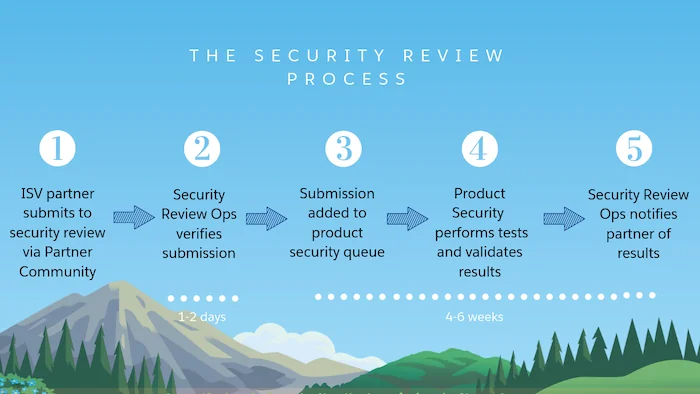
Security areas the partner should check
- CRUD and FLS: Apex that reads or writes records should enforce object and field permissions. Salesforce documents user mode database operations in Set an Access Mode for Database Operations.
- Sharing: Apex classes should declare a clear sharing model. Salesforce documents
with sharing,without sharing, andinherited sharingin the Apex sharing keyword guide. - Static analysis: Salesforce Code Analyzer provides reports for AppExchange security review preparation. Salesforce says partners should run scans, fix what they can, rerun scans, and submit reports in the Code Analyzer AppExchange guide.
- Tests and limits: Salesforce requires at least 75% Apex test coverage for deployment or marketplace packaging, and all tests must pass. Salesforce also documents per-transaction governor limits, including 100 SOQL queries and 150 DML statements. See Apex code coverage and governor limit guidance.
Technical checklist for a Salesforce marketplace product
The checklist below keeps the salesforce pdo conversation concrete. Ask the partner to explain the package type, namespace, source control model, Dev Hub access, package version process, install tests, customer upgrade path, and ownership of security review evidence.
Managed 2GP workflow example
Salesforce documents managed second-generation packages in the official Second-Generation Managed Packages guide. A typical command flow looks like this:
sf package create --name Acme_Partner_App --package-type Managed --path force-app --target-dev-hub DevHub
sf package version create --package Acme_Partner_App --installation-key-bypass --wait 30 --target-dev-hub DevHub
sf package version promote --package 04t000000000000AAA --target-dev-hub DevHub
The partner should explain where package aliases are stored, how beta versions differ from promoted versions, and how subscriber org upgrades are tested. Salesforce documents package creation and version creation in the official package creation guide and package version guide.
Secure Apex pattern
The example below shows the review standard a product team should expect. It uses an explicit sharing declaration, avoids SOQL in loops, handles null input, limits rows, and runs SOQL and DML in user mode. Replace the custom object and fields with your package schema.
public inherited sharing class AcmeLicenseService {
    @AuraEnabled(cacheable=true)
    public static List<Package_License__c> getActiveLicenses(Id accountId) {
        if (accountId == null) {
            return new List<Package_License__c>();
        }
        return [
            SELECT Id, Name, Status__c, Expiration_Date__c
            FROM Package_License__c
            WHERE Account__c = :accountId
            AND Status__c = 'Active'
            WITH USER_MODE
            LIMIT 50
        ];
    }

    @AuraEnabled
    public static Id createLicense(Id accountId, Date expirationDate) {
        if (accountId == null || expirationDate == null) {
            throw new AuraHandledException('Account and expiration date are required.');
        }
        Package_License__c license = new Package_License__c(
            Account__c = accountId,
            Status__c = 'Active',
            Expiration_Date__c = expirationDate
        );
        Database.SaveResult result = Database.insert(license, AccessLevel.USER_MODE);
        if (!result.isSuccess()) {
            throw new AuraHandledException(result.getErrors()[0].getMessage());
        }
        return result.getId();
    }
}
For larger write operations, pass lists into service methods and perform one DML operation for the collection. That keeps the code inside Salesforce governor limits and makes review easier.
Best practices for choosing a Salesforce PDO
Do not choose a product development partner only by rate. Ask for evidence that the team has built installable, upgradeable, secure marketplace products. In enterprise orgs, procurement teams often ask whether the vendor can support secure development lifecycle controls, vulnerability remediation, data deletion requests, and audit evidence.

Questions to ask before signing
- Which managed package types, namespaces, and release models has the team handled?
- Who owns architecture decisions, code review, test strategy, and security review evidence?
- How will the team document CRUD, FLS, sharing, integration endpoints, and third-party libraries?
- How are defects triaged after a customer installs the product in a subscriber org?
- What happens to source code, Dev Hub access, packaging keys, CI/CD secrets, and documentation at the end of the engagement?
Common errors with marketplace product engagements
Using an outsourcing team as a ticket factory
A ticket-only model works for narrow tasks, but it fails when the product has packaging and security constraints. The partner should participate in architecture review, backlog refinement, and release readiness.
Waiting too long to test installation
Install the package in a clean org early. A feature that works in a development org may fail in a subscriber org because of missing permission sets, protected metadata assumptions, namespace references, or post-install data requirements.
Treating security review as paperwork
Security review submission includes documentation, but the review is not only documentation. The code, configuration, test org, external service design, and scan results must support the claims in the submission.
Frequently Asked Questions
What does pdo stand for?
PDO can stand for different things. In Salesforce, pdo stands for Product Development Outsourcer. In workplace HR usage, it may mean paid day off, personal day off, or another leave category defined by the employer.
What is pdo meaning work?
pdo meaning work usually refers to a workplace leave abbreviation, such as paid day off or personal day off. The exact meaning depends on the employer’s HR policy, payroll system, or time-off rules.
What is a salesforce pdo?
A salesforce pdo is a Product Development Outsourcer that helps Salesforce ISVs or product teams build commercial marketplace solutions. The work can include architecture, managed packaging, Apex and LWC development, integration design, security review preparation, and release support.
Is a PDO the same as a Salesforce consulting partner?
No. A consulting partner may focus on implementing Salesforce for one customer. A product development outsourcer focuses on product development for installable or marketplace solutions. Some Salesforce partners offer both services, so confirm the assigned team has product packaging and security review experience.
Does a PDO guarantee AppExchange or AgentExchange security review approval?
No. A product development outsourcer can reduce risk by designing secure code, preparing evidence, running scans, and fixing findings, but Salesforce controls the security review outcome.
When should I hire a Salesforce PDO?
Hire a Salesforce Product Development Outsourcer before package architecture is fixed, before major security decisions are made, or when an existing custom solution needs to become a commercial product.