Salesforce for Outlook configuration enables seamless integration between your CRM data and Microsoft Outlook, allowing real-time synchronization of contacts, emails, and calendar events. This guide walks through the complete configuration process after installing the Salesforce for Outlook software on your local machine.
What is Salesforce for Outlook Software?
Salesforce for Outlook is a desktop integration tool that connects Microsoft Outlook with your Salesforce CRM. This integration allows users to sync contacts, emails, and calendar events bidirectionally, ensuring data consistency across both platforms. The software eliminates the need to switch between applications, improving productivity for sales teams and administrators.
Key benefits of proper Salesforce for Outlook configuration include:
- Sync every email, contact and calendar event in real time to avoid any data disparity for smooth continuity of workflow
- Use robust security measures like end-to-end encryption and multi-factor authentication (MFA) which help protect confidential business data from falling into the wrong hands
- With an improved and more user-friendly intuitive User Interface, the sixth version allows customizable dashboards
Prerequisites for Salesforce for Outlook Configuration
Before configuring Salesforce for Outlook software, ensure you have:
- Microsoft Outlook installed and configured with an email account
- Salesforce for Outlook software already installed on your local machine
- Valid Salesforce user credentials with appropriate permissions
- Network connectivity to access Salesforce servers
- Administrative rights on your local machine for initial setup
Step-by-Step Configuration Process
In our previous Salesforce training tutorial we learned how to install Salesforce for Outlook software on a local machine. This tutorial covers the complete configuration process after installation.
Step 1: Open Microsoft Outlook
Launch Microsoft Outlook on your local machine. The interface should display your standard Outlook workspace without any Salesforce integration visible initially.
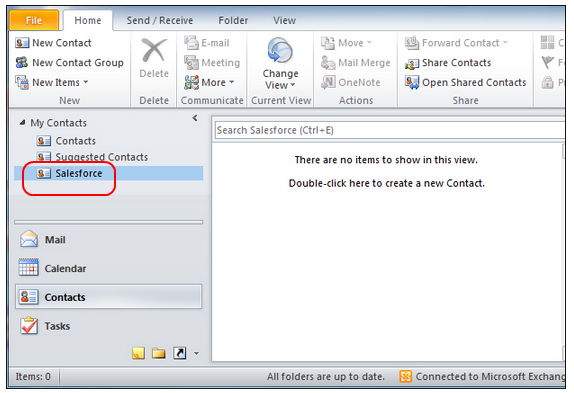
Notice that no Salesforce contacts appear in Outlook initially. This confirms that the integration has not been configured yet.
Step 2: Access Salesforce for Outlook Settings
Locate the small gray Salesforce icon in your system taskbar. This icon represents the Salesforce for Outlook service running in the background. Double-click on this gray icon to open the configuration interface.
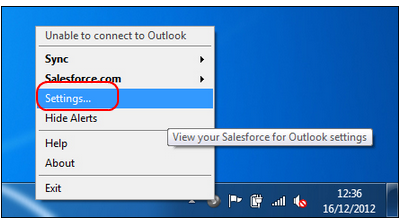
Step 3: Salesforce Login Authentication
After clicking the settings icon, the Salesforce login window appears. This is where you establish the secure connection between your local Outlook installation and your Salesforce org.
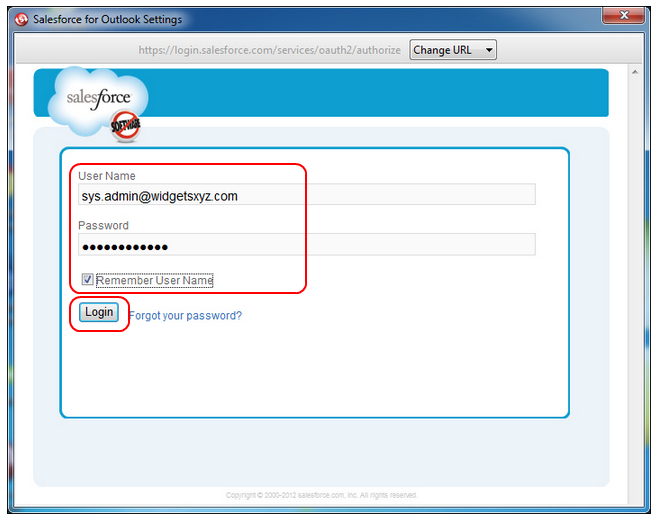
Enter your Salesforce username and password in the respective fields. Ensure you use the same credentials you use to access Salesforce through your web browser. Click the “Login” button to proceed.
Step 4: Grant Application Permissions
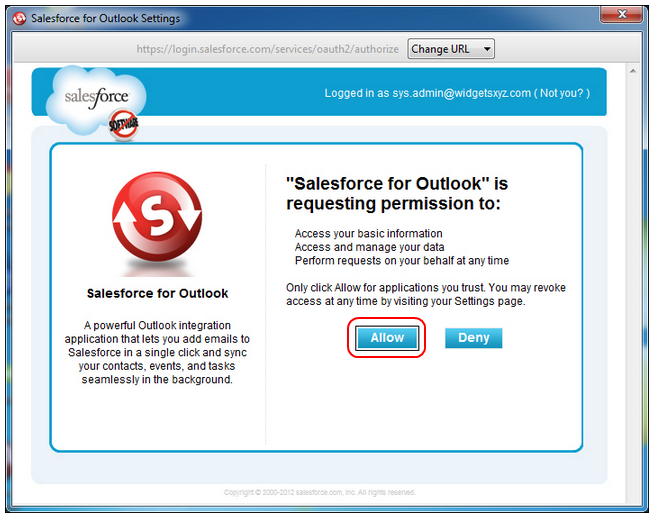
A permission window appears requesting authorization for the Salesforce for Outlook application to access your Salesforce data. This OAuth-based authentication establishes a secure, encrypted connection between Outlook and Salesforce.
Click “Allow” to grant the necessary permissions. This creates a secure connection that eliminates the need to enter your username and password repeatedly. The connection uses industry-standard security protocols to protect your CRM data during synchronization.
Step 5: Configure Contact Synchronization
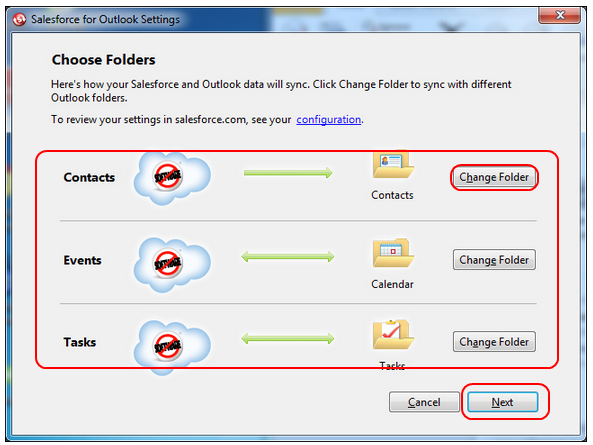
The next step involves configuring which Outlook folder will store your synchronized Salesforce contacts. Click “Change Folder” to specify the target location for contact synchronization.
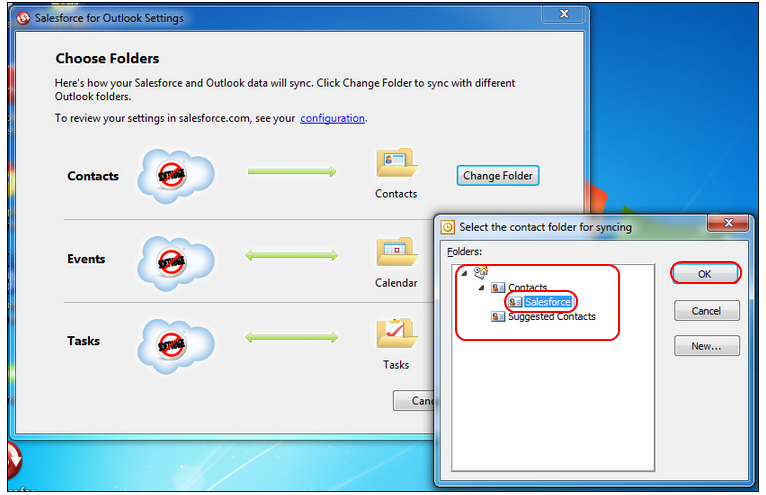
A folder selection popup appears. Select “Salesforce” as the target folder for storing synchronized contacts. This creates a dedicated folder structure that keeps Salesforce contacts separate from your personal Outlook contacts. Click “OK” to confirm your selection.
Step 6: Finalize Synchronization Settings
Click the “Next” button to proceed to the final configuration step.
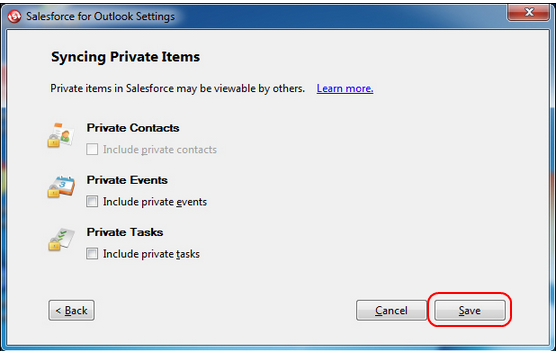
In the privacy settings, ensure that private items are not synchronized to maintain data security. This prevents personal calendar events and contacts from being uploaded to your Salesforce org. Click “Save” to apply these configuration settings.
Step 7: Verify Configuration Success
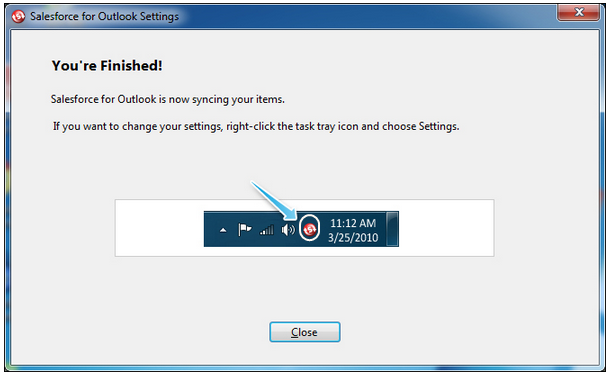
After completing the configuration, notice that the gray taskbar icon changes to a red icon, indicating that Salesforce for Outlook is now actively synchronized and running. Click “Close” to exit the configuration window.
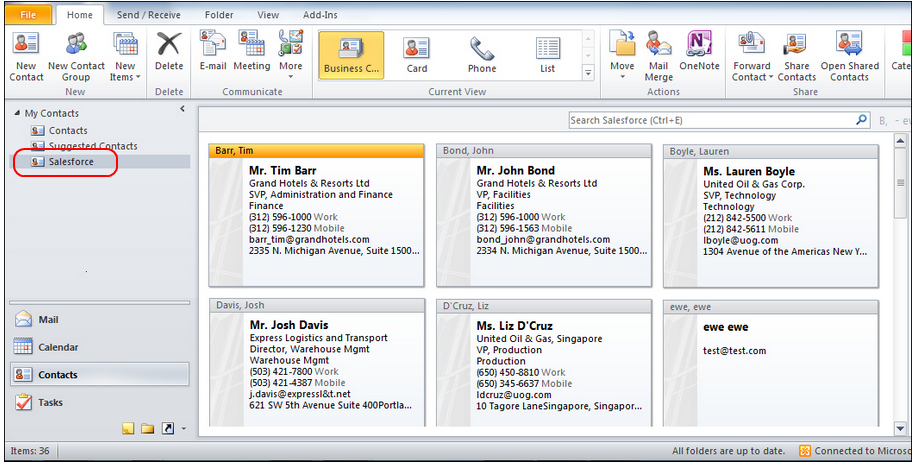
To verify successful configuration, check your Outlook contacts. The contact records from your Salesforce org now appear in the designated Salesforce folder, confirming that synchronization is working properly.
Understanding SFDC Integration Patterns
Salesforce (SFDC) integration with Outlook follows specific patterns that ensure data consistency and security. The integration uses REST API calls to synchronize data between systems, implementing the following patterns:
- Bidirectional Sync: Changes made in either Outlook or Salesforce are reflected in both systems
- Conflict Resolution: The system prioritizes the most recent changes when conflicts occur
- Field Mapping: Standard Outlook fields map to corresponding Salesforce contact and lead fields
- Security Model: Integration respects Salesforce sharing rules and field-level security
Troubleshooting Common Configuration Issues
If you encounter issues during Salesforce for Outlook configuration, consider these common solutions:
Authentication Failures
- Verify your Salesforce username and password are correct
- Check if your Salesforce org requires a security token appended to your password
- Ensure your IP address is within your org’s trusted IP ranges
- Confirm that Salesforce for Outlook is enabled in your org’s setup
Synchronization Problems
- Check network connectivity to Salesforce servers
- Verify that you have appropriate permissions to access contact records
- Ensure Outlook is not running in compatibility mode
- Restart both Outlook and the Salesforce for Outlook service
Best Practices for CRM Software Training
When implementing Salesforce for Outlook in an enterprise environment, follow these CRM software training best practices:
- Conduct user training sessions before deployment
- Create documentation specific to your org’s configuration
- Test the integration in a sandbox environment first
- Establish data governance policies for synchronized records
- Monitor synchronization logs for errors or conflicts
Security Considerations for CRM Cloud Software
Salesforce for Outlook implements enterprise-grade security measures:
- OAuth 2.0 Authentication: Secure token-based authentication without storing passwords locally
- TLS Encryption: All data transmission uses Transport Layer Security encryption
- Permission Inheritance: Integration respects Salesforce user permissions and sharing rules
- Audit Trail: All synchronization activities are logged for compliance purposes
This configuration process establishes a robust connection between your local Outlook installation and Salesforce CRM, enabling seamless data synchronization while maintaining security standards required for enterprise CRM cloud software implementations.
Frequently Asked Questions
What does SFDC mean in software terms?
SFDC stands for Salesforce.com, referring to the cloud-based Customer Relationship Management (CRM) platform. In software contexts, SFDC is commonly used as an abbreviation when discussing Salesforce integrations, APIs, or configurations.
What is CLM software in relation to Salesforce?
CLM software refers to Contract Lifecycle Management software. In Salesforce context, CLM functionality can be implemented through Salesforce CPQ (Configure, Price, Quote) or third-party applications that manage contract creation, negotiation, approval, and renewal processes within the Salesforce platform.
How does CRM software training help with Salesforce for Outlook?
CRM software training provides users with the knowledge to effectively use integrated tools like Salesforce for Outlook. Training covers data synchronization concepts, security best practices, troubleshooting common issues, and maximizing productivity through proper configuration and usage patterns.
What are common Salesforce integration patterns for Outlook?
Common Salesforce integration patterns for Outlook include: bidirectional data synchronization using REST APIs, real-time event-driven updates, batch processing for large data sets, conflict resolution mechanisms, and security token-based authentication. These patterns ensure data consistency while maintaining performance and security standards.
Why might Salesforce for Outlook configuration fail?
Configuration failures typically occur due to: incorrect login credentials, missing security tokens, IP restrictions in Salesforce org settings, insufficient user permissions, network connectivity issues, or Salesforce for Outlook not being enabled in the org setup. Verify each of these elements during troubleshooting.