Salesforce workflow outbound messages send record data to external systems automatically when specific criteria are met. This immediate workflow action transmits data in SOAP format to external endpoints, enabling real-time integration between Salesforce and third-party applications.
In this guide, you’ll learn how to configure outbound message workflow actions in Salesforce, including setup steps, best practices, and common use cases for workflow automation.
What is a Salesforce Workflow Outbound Message?
An outbound message is a workflow action that sends information to external servers when triggered by record changes. Unlike other workflow actions that operate within Salesforce, outbound messages enable integration with external systems by transmitting record data in Simple Object Access Protocol (SOAP) format.
Key characteristics of outbound messages:
- Immediate execution when workflow criteria are met
- SOAP-based XML format for data transmission
- Configurable field selection for data payload
- Built-in retry mechanism for failed deliveries
- Session ID included for authentication
When to Use Workflow Outbound Messages
Outbound messages work best for:
- Real-time data synchronization with external systems
- Triggering processes in external applications
- Notifying third-party services of record changes
- Integration scenarios requiring immediate response
Note: For new implementations, consider Platform Events or REST API callouts from Flow, as workflows are in maintenance mode and will be retired in favor of Flow automation.
Related Workflow Resources
- Different Workflow types in salesforce
- How to create Workflows in Salesforce
- How to update field using workflow action
- Email alert using workflow
Creating Outbound Message Workflow Action: Step-by-Step
Follow these steps to create an outbound message workflow action in Salesforce. This process involves creating the outbound message first, then associating it with a workflow rule.
Step 1: Create the Outbound Message
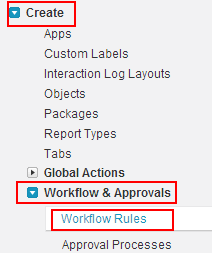
Navigate to Setup → Create → Workflow & Approvals → Outbound Messages (in Classic) or Setup → Process Automation → Outbound Messages (in Lightning Experience).
Click on New Outbound Message to begin configuration.
Step 2: Configure Outbound Message Settings
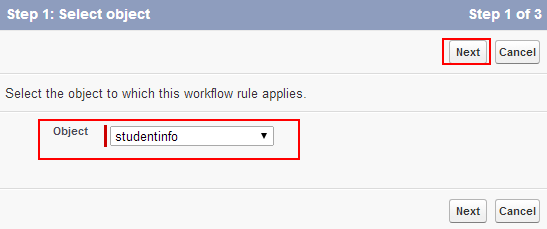
Select the object for your outbound message and click Next.
Configure the outbound message details:
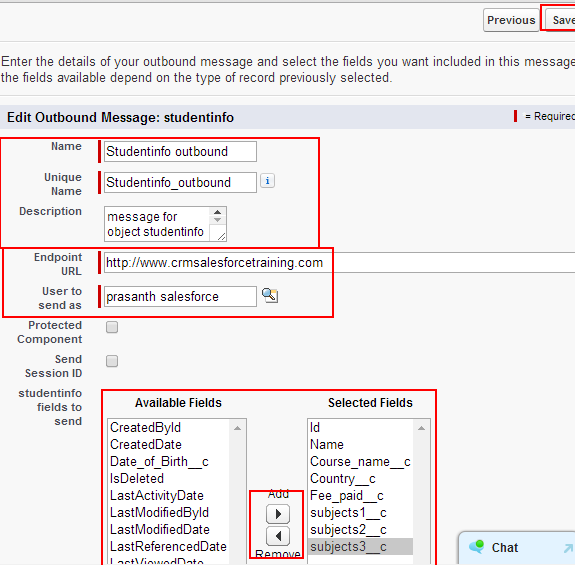
Required configuration fields:
- Name: Descriptive name for the outbound message
- Unique Name: API name (auto-populated)
- Description: Purpose and use case documentation
- Endpoint URL: External system URL to receive the SOAP message
- User to send as: Salesforce user context for the message
- Fields to Send: Select specific fields to include in the payload
Security considerations:
- Use HTTPS endpoints for secure transmission
- Configure proper authentication at the receiving endpoint
- Select only necessary fields to minimize data exposure
- Choose a dedicated integration user with minimal permissions
Step 3: Create Associated Workflow Rule
Navigate to Setup → Create → Workflow & Approvals → Workflow Rules.
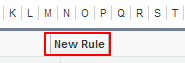
Click New Rule to create a workflow rule.
Select the same object used for your outbound message.
Click Next to proceed to rule configuration.
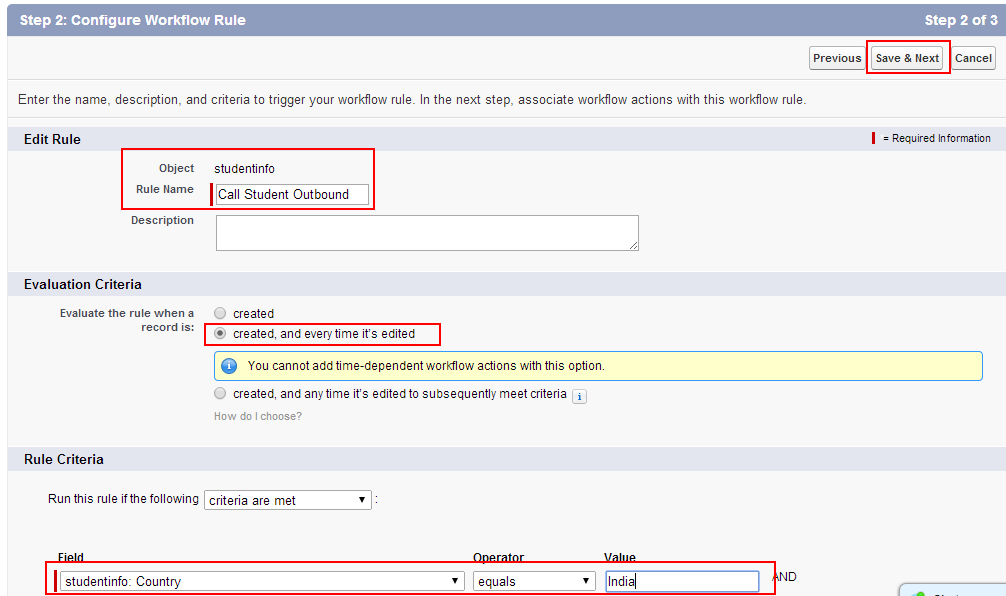
Step 4: Configure Workflow Rule Criteria
Configure the workflow rule settings:
- Rule Name: Descriptive name matching your outbound message
- Description: Document the business purpose
- Evaluation Criteria: Select “Evaluate the rule when a record is created, and every time it’s edited” for most use cases
- Rule Criteria: Define conditions that trigger the outbound message
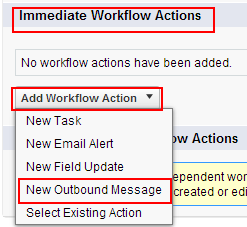
Click Save & Next to proceed to workflow actions.
Step 5: Add Outbound Message Action
In the workflow actions section, click Add Workflow Action and select New Outbound Message.
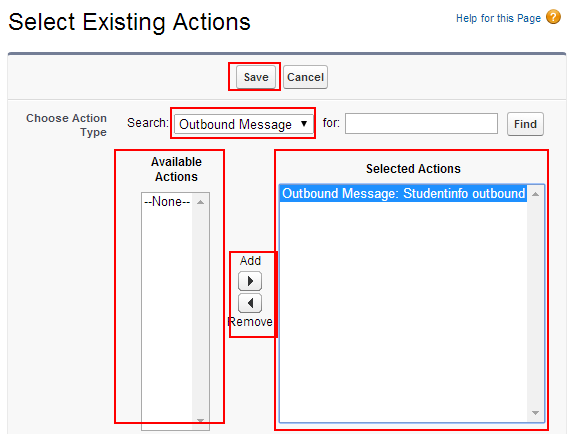
Select your previously created outbound message from the available actions and move it to “Selected Actions”.
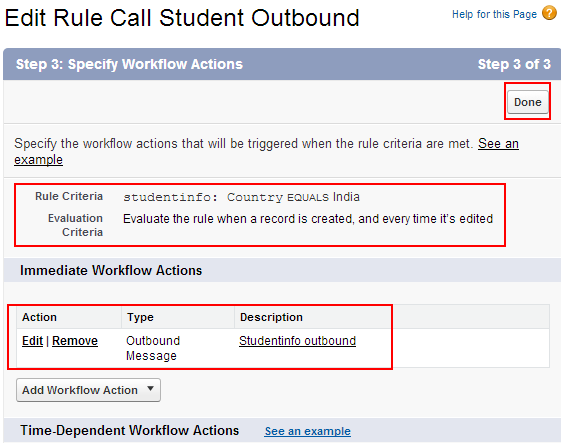
Save the workflow action configuration.
Step 6: Activate the Workflow
Click Done to complete the workflow setup.
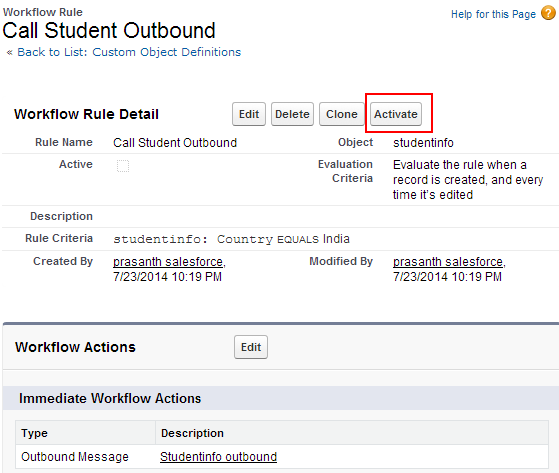
Activate the workflow by clicking Activate. The workflow must be active to send outbound messages.
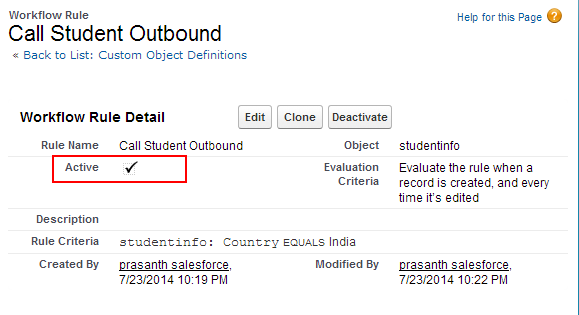
Your workflow outbound message is now active and will trigger when the specified criteria are met.
Salesforce Workflow Best Practices
Performance Considerations
- Use selective criteria to avoid unnecessary message volume
- Monitor outbound message queue for failed deliveries
- Implement proper error handling at the receiving endpoint
- Consider governor limits for workflow executions
Security and Compliance
- Use dedicated integration users with minimal permissions
- Implement IP restrictions for enhanced security
- Log and monitor outbound message activity
- Ensure GDPR compliance for data transmission
Migration to Flow
Salesforce recommends migrating from workflows to Flow for new automation. For outbound integration, consider:
- Platform Events for event-driven architecture
- Flow with HTTP callouts for REST API integration
- MuleSoft Composer for complex integration scenarios
Troubleshooting Outbound Messages
Common Issues
- Messages not sending: Verify workflow is active and criteria are met
- Endpoint errors: Check URL accessibility and authentication
- Field access errors: Ensure sending user has field permissions
- SOAP parsing errors: Validate endpoint SOAP handling
Monitoring and Debugging
Use Setup → Monitoring → Outbound Messages to:
- View message delivery status
- Retry failed messages
- Download SOAP message content
- Monitor delivery attempts and errors
Frequently Asked Questions
What is workflow in Salesforce?
Salesforce workflow is an automation tool that executes actions based on specified criteria when records are created or updated. Workflow actions include field updates, email alerts, tasks, and outbound messages. While still supported, Salesforce recommends using Flow for new automation projects.
How does Salesforce workflow automation work?
Workflow automation in Salesforce evaluates records against defined criteria when they are created or modified. When criteria are met, the system executes specified actions immediately or on a time-based schedule. Actions can update fields, send emails, create tasks, or trigger outbound messages to external systems.
What are common Salesforce workflow interview questions?
Common workflow interview questions include: What are the different types of workflow actions? How do time-based workflows work? What are workflow rule evaluation criteria options? How do you troubleshoot workflow issues? What are the limitations of workflows compared to Flow? How do you migrate workflows to Flow?
Can Salesforce be used for workflow management?
Yes, Salesforce provides comprehensive workflow management through Flow, Process Builder (retired), and legacy Workflows. Flow is the recommended platform for workflow management, offering visual process design, complex logic handling, screen flows for user interaction, and integration capabilities with external systems.
What is the difference between workflow and Flow in Salesforce?
Workflows are legacy automation tools with limited functionality, supporting only immediate and time-based actions. Flow is the modern automation platform offering visual design, complex logic, user interaction screens, loops, decision elements, and extensive integration options. Salesforce recommends migrating from workflows to Flow for enhanced capabilities.